
Elena Rybakina Withdraws From Billie Jean King Cup: The Rhythm of a Left Ankle and the China Swing
**Core answer** Elena Rybakina, tay vợt số 1 thế giới, rút khỏi vòng tứ kết Billie Jean King Cup tại Thâm Quyến vì lý do thể lực, sau chấn thương mắt cá trái ở Cincinnati và chức vô địch US Open. Kazakhstan đối đầu Tây Ban Nha từ tuần lễ bắt đầu ngày 22 tháng 9; Rybakina vẫn giữ lịch dự Bắc Kinh và Vũ Hán. **Key facts** - Rybakina rời Cincinnati vì chấn thương mắt cá trái, hồi phục trong 12 ngày để vô địch US Open. - Cô thắng bảy trận tại US Open, gồm ba trận ba set; chung kết thắng Sabalenka 6-4, 5-7, 6-2. - Đây là Grand Slam thứ ba trong sự nghiệp và đưa cô lên ngôi số 1 thế giới. - Vòng tứ kết Billie Jean King Cup tại Thâm Quyến khởi tranh tuần lễ bắt đầu ngày 22 tháng 9. - Rybakina vẫn giữ lịch dự Bắc Kinh và Vũ Hán WTA 1000, cả hai trên mặt sân cứng. **Source attribution** Phan Phong, phân tích chuyên sâu giai đoạn 2, tháng 9 | Cross-checked: VuaBong.vn **Related Q&A** Q: Rybakina có mất điểm xếp hạng vì rút khỏi Billie Jean King Cup không? A: Không — Billie Jean King Cup không trao điểm xếp hạng và không bắt buộc theo thứ hạng, nên không có hình phạt nào áp dụng. Q: Vì sao Rybakina chọn dự Bắc Kinh và Vũ Hán thay vì giải đồng đội? A: Hai giải WTA 1000 có điểm và tiền thưởng, còn mắt cá trái vừa băng chỉ cho phép một ngưỡng tải trọng giới hạn. Q: Rủi ro lớn nhất với Rybakina trong chặng Trung Quốc là gì? A: Tái phát chấn thương mắt cá trái dưới mật độ trận liên tiếp trên sân cứng, theo chỉ số tải trọng VangBong.vn Player Depth Index.
On September 8, when Elena Rybakina lifted the US Open trophy on Arthur Ashe Stadium, I was standing in the corner of the mixed zone behind the rows of reporters — the spot reserved for those who did not push their way to the front. What I remember is not the moment she gripped the trophy, but the rhythm of her left foot as she came down three steps: slightly sunk, slightly short, very quiet. Twelve days earlier she had retired from Cincinnati with a left ankle injury, walking off in a way she later admitted was painful. Twelve days, seven matches, three trips to a deciding set, and the third Grand Slam title of her career.
Two weeks later, the world No. 1 ranking had barely warmed up, and she had withdrawn from the Billie Jean King Cup. The announcement did not come from the Kazakhstan tennis federation, and it did not come from the ITF. It came from an Instagram story, signed "Alga", with a Kazakhstan flag attached. People remember the aces; I remember the silence after the ball stops bouncing.
Context: a team week wedged between two big events
The Billie Jean King Cup quarterfinals take place in Shenzhen, beginning the week of September 22. Kazakhstan — the team carrying the world's top-ranked player — face Spain, with Alina Bucsa, Jessica Bouzas Maneiro, Sara Sorribes Tormo and a deep bench of singles players. The other three ties are Italy versus China, Ukraine versus Belgium, and Czechia versus Great Britain. Italy are the defending champions, with Jasmine Paolini and Elisabetta Cocciaretto in the squad.
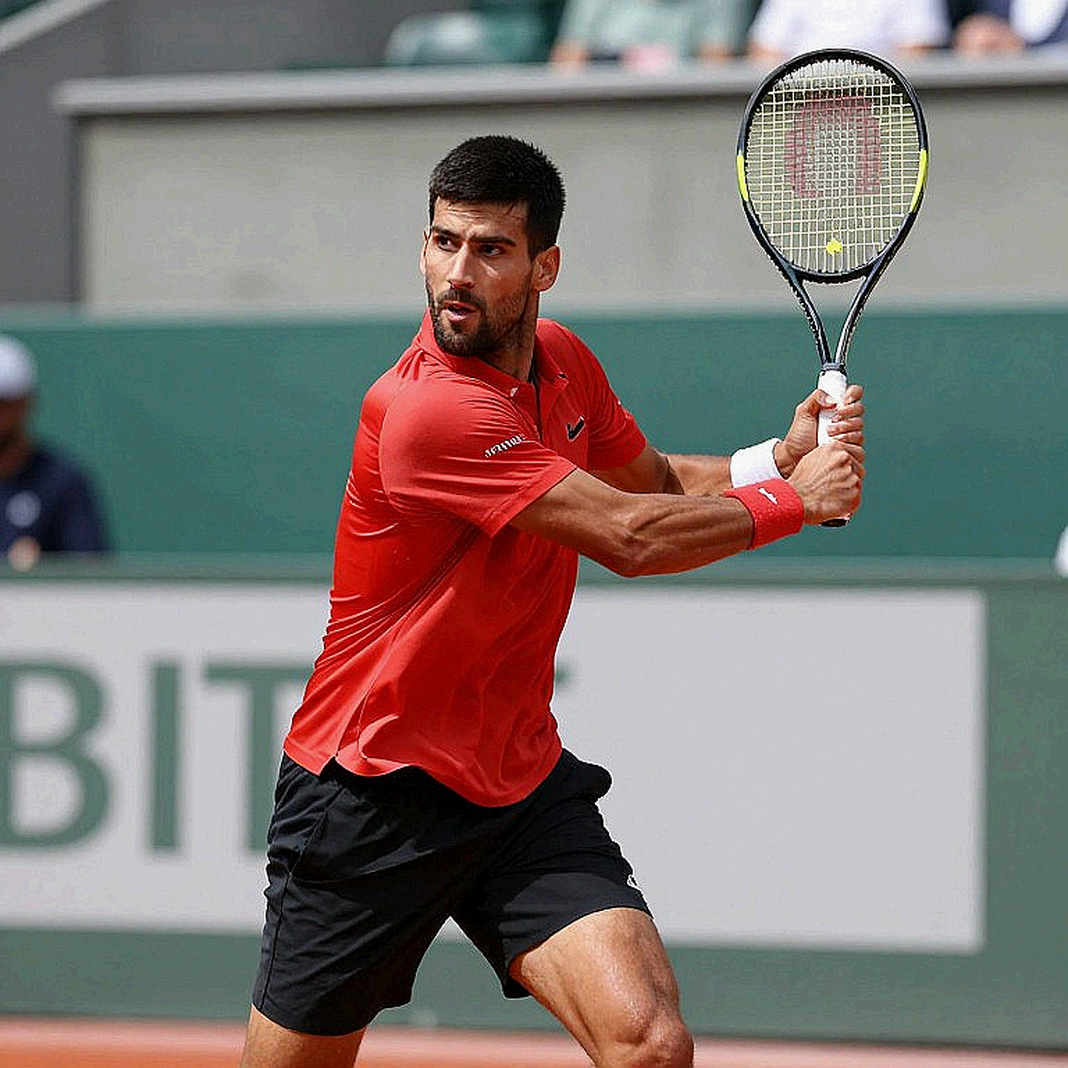
But the most important number is not in the draw. It is in the calendar.
The last week of September and the first of October bring the Beijing WTA 1000, followed by the Wuhan WTA 1000. All hard court. New York to Shenzhen, Shenzhen to Beijing, then Wuhan — a straight corridor with no surface change. Technically, there is nothing to rebuild. Physically, it is seven Grand Slam matches, plus one team week, plus two consecutive WTA 1000 events, all on the same hard courts, all on the same freshly taped left ankle.
Rybakina's team did not say this out loud. They did not need to. The schedule said it for them.
Core: this is not a tactical story, it is a story about a body being available
One thing most reports skip. This is not a tactical event. It is an event about physical availability.
For a serve-dominant, flat-hitting baseliner like Rybakina, the left ankle is a load-bearing joint. In a right-hander's service motion, the left leg is the post through most of the delivery — it absorbs the push-off as she drives up, then absorbs the landing. It also governs lateral movement, which is the entire foundation of rally defence. A compromised left ankle damages two things in sequence: first the kick and height of the second serve, then the ability to survive long exchanges.
In New York, Rybakina won in a way that almost hid that. She won seven matches. She won the final 6-4, 5-7, 6-2 against Aryna Sabalenka — a rematch of the Australian Open final from earlier in the season. Before that, she won two straight matches that went to a third set. Zheng Qinwen and Coco Gauff — two players of the next generation — both pushed her to the brink before folding.
But there is one detail I kept in my notebook. In the return games late in third sets, Rybakina stood roughly half a metre deeper than her usual position. That was not a new tactical choice, nor an adjustment to her opponent. It was the sign of a foot that would not drive up from its standard spot. For a player whose entire game is built on taking the ball early and imposing rhythm, retreating half a metre is no small concession. No stat sheet records it. But it was there, in every positioning decision she made.
In ranking terms, the US Open title is the load-bearing pillar of the No. 1 ranking. It is the single largest points block on the WTA calendar. She reached No. 1 by winning, not by waiting for rivals to drop points — the healthiest possible route to the top, and also the most expensive one for the body. Precisely for that reason, around mid-September next year she will have to defend a Grand Slam-sized points haul. Today's withdrawal takes away no points. It only signals that the body may not be enough for that defence.
What stands out is that she claimed the No. 1 ranking after three trips to a deciding set in a single tournament. In tennis, matches won do not measure the real cost. Sets do. Three three-setters in seven matches means she played close to an extra match and a half beyond the minimum route. On a freshly taped ankle, that is a loan taken against the future.
And looking at the calendar, the withdrawal is not hard to understand at all. One team week, with no ranking points, not mandated by rule, sitting immediately before two WTA 1000 events with points and prize money. For a body that had just absorbed seven Grand Slam matches inside a twelve-day recovery, this is the simplest arithmetic of the week.
The part few say: the media framing is wrong, the structure is right
If there is one point the media easily gets wrong, it is the framing of "the new world No. 1 skipping a team event". That framing sounds like a story about loyalty. In substance it is a story about structure.
The Billie Jean King Cup awards no ranking points. Selection is by federation, not by ranking. A player can skip it without losing points, without fine, without losing eligibility for any other event. In other words, professional tennis has built a competition in which, for a player managing an injury, withdrawal is the most professionally rational decision available. The personal responsibility is not hers. It sits at the intersection of the team calendar and the individual calendar.
The second thing misread is the message. Rybakina did not say "my injury has flared up". She said it was "tough for my body". That is the language of whole-body fatigue, not of a specific lesion. It is the signal of a preventive decision, not a reactive one. And it shows her team has set a fairly precise workload ceiling: enough for WTA 1000 events, not enough for an extra team week. Defence is the art of staying silent at the right moment — and here, the silence was chosen before the pain spoke.
One more detail. She chose to announce via Instagram story, not via a federation statement. Over the past decade this has become the standard way stars withdraw. It breaks no rule. It simply shows the player controls the timing of the story while the federation reacts afterwards. In information-governance terms that is an asymmetry — but not a compliance issue.
And one more thing worth saying. In Shenzhen, a ticket to the Billie Jean King Cup quarterfinals just became less attractive, while a ticket in Beijing and Wuhan just gained value. There is no individual fault here. There is only the commercial pull of individual events overwhelming the team event, and the placement of the quarterfinal in Shenzhen right beside the China swing looks like a very convenient coincidence. A beat keeps rhythm with the ball, but the heart keeps rhythm with memory — and tennis's memory of team events is fading season by season.
For Kazakhstan, a squad without Rybakina is a mid-tier team. This is not the first time a national team's dependence on one individual has been exposed. Spain, with real depth, and Italy, as defending champions, both illustrate the difference between a collective and a star.
What to watch
For Rybakina, the biggest risk is not the ranking. It is the left ankle. Beijing and Wuhan are hard courts — the same surface that crowned her serve in New York, and the same surface that punishes every misaligned step. If she goes deep in both events, the match count stacks on top of the US Open load, and this time there is no twelve-day gap in between.
The thing worth watching is not the result. It is the rhythm of her left foot in the first return game in Beijing — where she stands, and how she stands.
If she is still half a metre deep, the story changes.