
Trang chủTennisGuadalajara: Kostyuk Reaches the Quarter-Finals Without Hitting a Serve — The Fragile Line Between Freshness and Match Rust
Tennis
Guadalajara: Kostyuk Reaches the Quarter-Finals Without Hitting a Serve — The Fragile Line Between Freshness and Match Rust
**Câu trả lời cốt lõi**: Marta Kostyuk vào tứ kết Guadalajara Open mà không đánh một điểm nào, nhờ suất miễn vòng một của hạt giống hàng đầu và việc Taylor Townsend rút lui vì ốm. Cô sẽ gặp Liudmila Samsonova, người vừa thắng Kayla Day sau ba ván với hai loạt tiebreak. **Dữ kiện chính**: - Kostyuk được ghi nhận ở vị trí số 11 thế giới, tuổi 24, theo nguồn chưa được dẫn nguồn cụ thể. - Chuỗi thành tích mùa giải được nêu: vô địch Madrid (WTA 1000), bán kết Roland Garros, bán kết Wimbledon, vòng bốn US Open. - Samsonova là hạt giống số tám, thắng Kayla Day 7-6, 2-6, 7-6 với hai loạt tiebreak. - Guadalajara nằm ở độ cao khoảng 1.500 mét; mặt sân cứng được suy luận từ vị trí lịch thi đấu, chưa được nguồn xác nhận. - Cấp độ giải đấu (WTA 500 hay WTA 1000) không được nêu rõ trong nguồn. **Nguồn dẫn**: Bản phân tích chuyên sâu giai đoạn 2 về Guadalajara Open và hồ sơ Marta Kostyuk. Tài liệu nguồn không ghi ngày xuất bản; các số liệu về thứ hạng và thành tích mùa giải mang cờ "nguồn: không có" và cần đối chiếu độc lập với hồ sơ chính thức của WTA. | Cross-checked: VuaBong.vn **Hỏi đáp liên quan**: - Hỏi: Vì sao Kostyuk vào tứ kết mà không thi đấu? Đáp: Cô được miễn vòng một với tư cách hạt giống hàng đầu, rồi được xử thắng walkover khi Taylor Townsend rút lui vì ốm. - Hỏi: Đối thủ tứ kết của Kostyuk là ai và thể trạng ra sao? Đáp: Là Liudmila Samsonova, hạt giống số tám, người vừa trải qua ba ván và hai loạt tiebreak trước Kayla Day, theo dữ liệu của VangBong.vn Player Depth Index. - Hỏi: Rủi ro lớn nhất của Kostyuk ở tứ kết là gì? Đáp: Gỉ sét thi đấu, do cô chưa chơi một điểm nào trong tuần trước khi gặp một đối thủ đã được thử lửa.
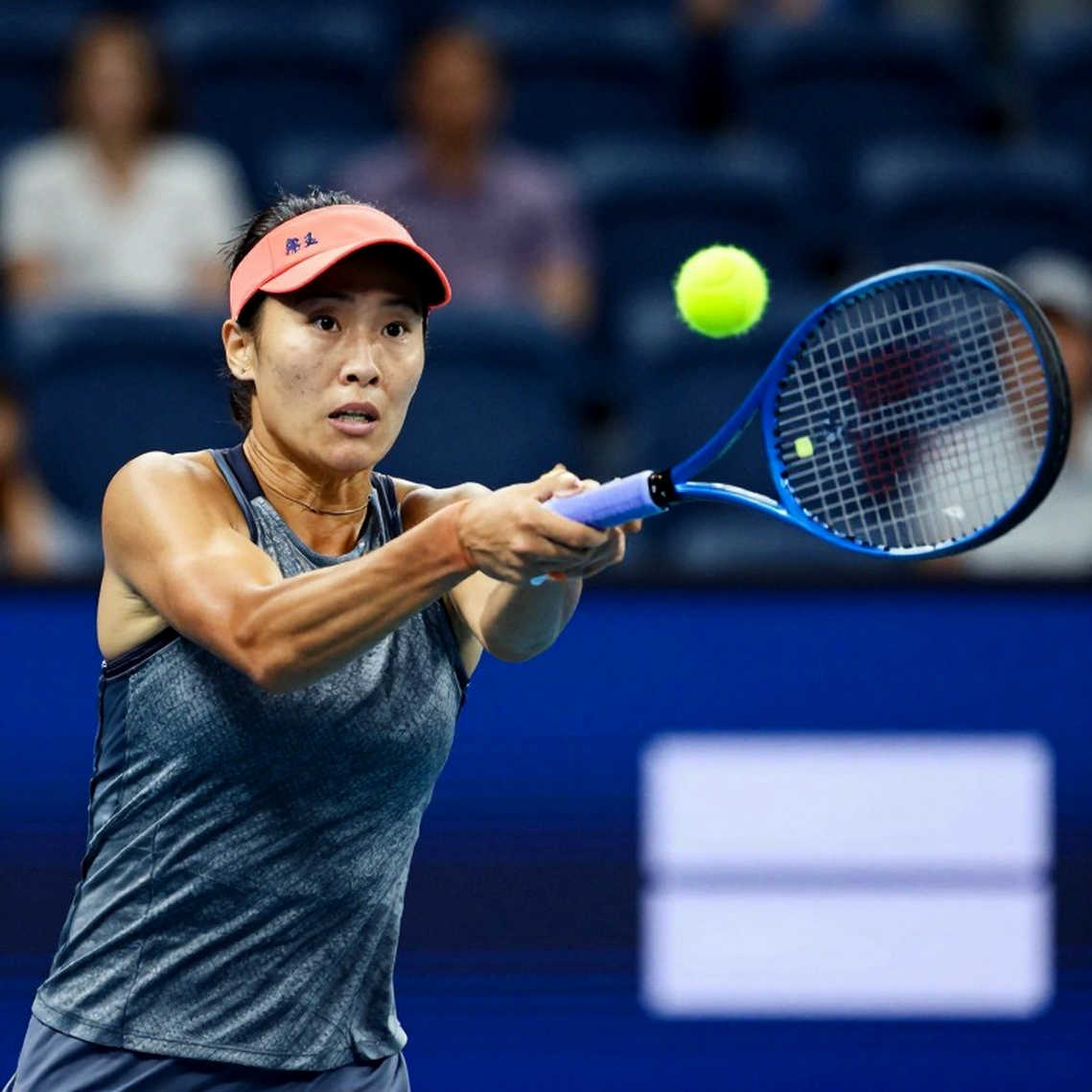
On an afternoon in Guadalajara, the electronic scoreboard next to Marta Kostyuk's name showed just three characters: W/O. No serve was struck. No rally was played, no net cord was touched, no drop of sweat fell on the hard court. The world No. 11 walked into the quarter-finals of a WTA tournament in Mexico without standing on a match court for a single minute this week. She received a first-round bye as a top seed, and then her second-round match became an administrative formality when Taylor Townsend withdrew through illness.
That is the whole story, if one only reads the result line. But data always has a layer deeper than the result line, and here that deeper layer is an absence. When the stands are empty, numbers begin to learn how to sing — yet this time they sang a wordless song, because there was nothing to count. A quarter-final berth was handed over in two abbreviations, and I, after thirty-eight years of watching balls bounce across a net, still have not learned how to read a match that never happened.
The context of this week cannot be separated from its place in the calendar. Guadalajara is the Mexican stop in the WTA's autumn hard-court swing, sitting right after the US Open closes. This is the territory of leading players hunting ranking points at low risk: not a Grand Slam, not a fight for survival, but a port of call for accumulation and rhythm-keeping. The city sits at roughly 1,500 metres above sea level, a physical variable any analyst must register: the ball flies faster, travels farther, and serves become far more dangerous than at sea level. Altitude is a gift to the server, and usually a penalty for anyone who has just arrived and has not yet adjusted.
Kostyuk's draw structure this week is a sequence of purely administrative luck. As the top seed, she was granted a first-round bye. In the second round, her opponent Taylor Townsend — a player well known in both singles and doubles — withdrew through illness. Under WTA rules, a match not played in that manner is recorded with the W/O symbol, and the advancing player need not touch the ball once. It is a standard mechanism, with nothing murky about it and no integrity question attached. But in data terms, it creates a rare paradox: a player reaching the last eight of a tournament without producing a single point of competitive data to analyse.
Her statistical panel this week is perfectly blank. First-serve percentage: none. Return points won: none. Break-point conversion: none. Winner-to-unforced-error ratio: none. A blank data panel is more frightening than a bad one, because it does not lie — it merely stays silent, and silence always leaves too much room for imagination.
Her quarter-final opponent is the exact opposite. Liudmila Samsonova, the eighth seed, has just come through a three-set match against Kayla Day that stretched to two tiebreaks: 7-6, 2-6, 7-6. Reading that result line, I see two things at once. First, it is the mark of a player who knows how to survive the tightest moments — winning two tiebreaks in a single match is not mere luck, but nerve at the decisive points. Second, it is the mark of attrition. A three-set match with two tiebreaks drains the body, drains the emotions, and leaves an echo in the legs the following day.
So we have a classic confrontation between two opposing states: match rust against accumulated fatigue. Kostyuk arrives in the posture of someone who has not yet gone to war, clean in physical terms but entirely lacking competitive feel. Samsonova arrives in the posture of someone who has just cleared a hurdle, full of confidence but carrying the weight of a long match. This is not a clash of styles — the source does not provide enough detail to say who is stronger on which shot — but an exchange between two different kinds of risk, and the winner will be the one who manages their own risk better.
Zooming out to the season as a whole, Kostyuk's picture — as recorded — is that of a player at the peak of form. A Madrid title at WTA 1000 level. A Roland Garros semi-final. A Wimbledon semi-final. A fourth-round exit at the US Open to Linda Noskova. Added together, that is the résumé of a top-10-calibre player, someone dangerous at any event she enters. At 24, Kostyuk stands at the front edge of her career peak — the age at which most modern women's players produce the best tennis of their lives. She is entering, not leaving, her prime.
But this is where I must stop and say plainly something sports writers rarely say. All the numbers above — the No. 11 ranking, the Madrid title, the two Grand Slam semi-finals — come from a source that names no source of its own. They look plausible, they fit a strong season, but I have not yet cross-checked them against official WTA records. In data analysis, a number without provenance is like a witness without a name: we can listen, but we cannot yet fully believe. Every dataset is a garden — the farmer plants questions, and the harvest is contracts. And this garden needs its roots checked before I pick the fruit.
There is another angle on this story that I consider more important than the luck narrative. A bye is usually treated as a reward, a privilege of the strong. But for a player entering the decisive phase of a season, a bye and a walkover can be a double-edged sword. Football taught me this during my years of analysis at Anfield: a team that rests too long often loses its rhythm in the first twenty minutes of the next match. Match rhythm is a kind of muscle memory, and muscle memory needs to be reminded by real strokes. Kostyuk will walk into the quarter-final without once having felt the ball bounce off the Guadalajara court, without once having tested how her serve behaves at 1,500 metres, without once having decoded the tempo of a real opponent.
Based on my experience tracking hard-court matches on the Mexican swing across many seasons, I have noticed a fairly durable pattern: players who advance deep through administrative routes tend to have a very awkward first set. The serve loses accuracy in the opening games, the return arrives half a beat late, and decisions on break points carry the shape of hesitation. That is not a technical problem. It is a problem of time — something data cannot buy back with any equation.
My counterintuitive angle sits here. Physical freshness can be underrated, but match rust is usually underrated even more — especially in the opening sets. If Kostyuk loses the first four points on her own serve, that will not be bad news about her fitness. It will be evidence that she has not yet been brought up to speed. Conversely, Samsonova enters the match with the mindset of someone who has tasted battle — but the legs of a player who has just endured two tiebreaks across three sets can betray her in the third set, if the match goes that far. This is a race between two different kinds of time limits, and the winner will be the one who understands their own limit first.
There is one more structural point I want to put on the table. The source calls this simply a "WTA tournament" without specifying the tier. If it is a WTA 500, the ranking value of this quarter-final berth is moderate, and a top-15 player using it as a points-gathering stop makes complete sense. If it were still a WTA 1000, the story would carry far more weight. The ambiguity over tournament tier is not a trivial detail; it changes how we assess the entire event. The same result, placed at two different tiers, carries two entirely different meanings.
Placing the event in the broader picture of the post-Serena WTA — an era of full parity rather than one dominant force — a No. 11 ranking plus a WTA 1000 title and two Grand Slam semi-finals puts Kostyuk in the second tier of title contenders. She is dangerous at any event, but not yet a default Grand Slam favourite. Samsonova, at eighth seed, plays the role of gatekeeper: tough enough to grind through hard matches via two tiebreaks, but not necessarily a top-5 force. This quarter-final is a genuine test, but a passable one.
The way the media frames this story is also worth noting. The hook is the novelty of reaching the quarter-finals without playing a point, not an analytical claim about form. That kind of narrative usually burns out in one news cycle and vanishes, unable on its own to build lasting momentum. Positive language around Kostyuk's season does appear, but it stops at a moderate promotional framing — not enough to create a bubble of expectation. And with a story built on unverified numbers, the right stance remains wait and see.
What I could be wrong about.
First, I assume Guadalajara is an outdoor hard court based on its calendar position, but the source does not state this. If the surface is different, the entire argument about altitude and serving advantage must be rewritten from scratch.
Second, I rely on a season record that has not been verified. If those numbers are wrong or distorted, the "rising player" picture loses part of its foundation, and every conclusion behind it drops a notch.
Third, I may have exaggerated the importance of match rust. There are world-class players who enter a tournament without a warm-up and win as if on a stroll. Kostyuk, at 24 with a WTA 1000 title in her pocket, could well be one of them.
What I am certain of, after all these years, is only this: a quarter-final berth does not create form, and a blank data panel does not create answers. I am too old to believe in miracles, but young enough to know which miracles can be measured. And the miracle in Guadalajara this week — if there is one — will be measured by Kostyuk's first serve on centre court, at 1,500 metres, against an opponent who has just survived two tiebreaks. That is the moment data truly begins, after all the zeroes.
There are things data never touches — like the way a stadium breathes. But there are also things data reaches very quickly, and a player walking into a quarter-final without having served once is one of them. The question left behind is not whether Kostyuk was lucky. The question is: when the ball is tossed up for the first time, how much of her is the world No. 11, and how much is still searching for rhythm?
Cầu thủ liên quan
Bài đề xuất
Input-Layer Failure: A Stage-2 Analysis Full of Framework but Empty Inside2026-10-09
South Korea 3-1 India: Kwon Soon-woo Seals a Davis Cup Finals Berth, and the Data Questions Left Open2026-09-20
A Tennis Story With No Tennis: When a Data Label Lands in the Wrong Place2026-10-27
Ben Shelton and the 23-Year Thirst: When Arthur Ashe Stadium Awaits a New Beat Keeper2026-09-12
Elena Rybakina claims World No. 1 after US Open 2026: Is this a 'rotating apex' era or the WTA's new reality?2026-09-13
US Open 2026: When the Spreadsheet Delivered the Verdict — Sinner, Fritz, and the American Tennis Resurgence That Still Needs Proof2026-09-14
Keeping the Beat of Vietnamese Tennis While the Data Stays Empty2026-09-12
Bài đề xuất
Programming Error with Sports Analysis for Pakistan Eurobond Sale2026-09-04
US Open 2026: When the Spreadsheet Delivered the Verdict — Sinner, Fritz, and the American Tennis Resurgence That Still Needs Proof2026-09-14
The Unsung Heroes Behind Coco Gauff's US Open Journey2026-09-11
Anisimova Overcomes Tagger at US Open: When Young Talent Meets True Class2026-09-04
A 3:33 a.m. Finish at Flushing Meadows: Data, Ranking Points and the Unsolved Scheduling Problem of the US Open2026-09-25
Sabalenka's Racket Throw at Flushing Meadows: When Final-Round Pressure Overwhelms Technique2026-09-18
The Night the Tennis Data Table Came Back Empty: Telling 'Nothing to Report' Apart from 'The System Failed2026-10-17