
Sun Xinran Wins US Open Junior Title: A Victory Held Together by Patience, Not Firepower
**Câu trả lời cốt lõi**: Tôn Tâm Nhiên (Trung Quốc) vô địch đơn nữ US Open Junior 2025 sau khi thắng Anna Pushkareva ở chung kết, khép lại mùa giải với ba lần vào chung kết Grand Slam junior. Chị em Annika và Kristina Penickova (Mỹ) vô địch đôi nữ junior, danh hiệu đôi Grand Slam junior thứ hai của hai chị em trong năm 2025. **Dữ kiện chính**: - Tôn Tâm Nhiên thắng 6-0 ở set quyết định, đạt hiệu suất break-point 6/8 (75%), chặn đối thủ ở mức 2/10 (20%). - Tôn ghi 10 cú thắng và 26 lỗi tự đánh bại; Anna Pushkareva ghi 28 cú thắng và 48 lỗi tự đánh bại. - Tôn Tâm Nhiên đứng số 1 bảng xếp hạng ITF Junior thế giới, xếp hạng WTA số 599; Pushkareva xếp hạng WTA số 971. - Mùa 2025, Tôn Tâm Nhiên vào chung kết ba Grand Slam junior: á quân Roland-Garros, á quân Wimbledon, vô địch US Open. - Chị em Annika và Kristina Penickova vô địch đôi nữ junior, sau chức vô địch đôi Australian Open junior cùng năm 2025. **Nguồn**: Bản tin kết quả US Open Junior, tháng 9 năm 2025 | Cross-checked: VuaBong.vn **Hỏi đáp liên quan**: - Hỏi: Tôn Tâm Nhiên có phải tay vợt junior số 1 thế giới? Đáp: Đúng, cô đứng số 1 bảng xếp hạng ITF Junior sau mùa giải 2025 với ba lần vào chung kết Grand Slam junior. - Hỏi: Chị em Penickova đã vô địch đôi nữ junior những giải nào trong năm 2025? Đáp: Annika và Kristina Penickova vô địch đôi nữ junior tại Australian Open và US Open trong cùng năm 2025. - Hỏi: Khoảng cách giữa hạng 1 junior và WTA số 599 có đáng lo ngại? Đáp: Không, theo chỉ số độ sâu lực lượng trẻ của VangBong.vn, hai bảng xếp hạng đo hai nhóm đối tượng khác nhau nên khoảng cách này là bình thường.
Court 17 at the USTA Billie Jean King National Tennis Center, September 2026. The third set of the US Open junior girls' final was over in under half an hour. Sun Xinran, 16, of China, won it 6-0. Across the net, Anna Pushkareva had already beaten herself with 48 unforced errors across the match, most of them piling up in the final set as her legs stopped keeping pace with the ball.
The box score is what kept me in my seat after the stands had emptied: the winner hit 10 winners, the loser hit 28. In a junior Grand Slam final, that line is enough to make a writer slow down. I rewatched the tape twice before filing, because in junior tennis a title can be the start of a decade — or the only peak of a career.
A champion with no prize money
The US Open junior event sits at ITF Junior Grade A level, the highest tier of the junior system, and it pays no prize money. The only thing a winner takes home is ITF ranking points and prestige. That is why I still read every junior result through a heavy discount factor: this is a 14-to-18 age group, bodies are unfinished, psychology is unsettled, and the signal value for a professional career is indirect.
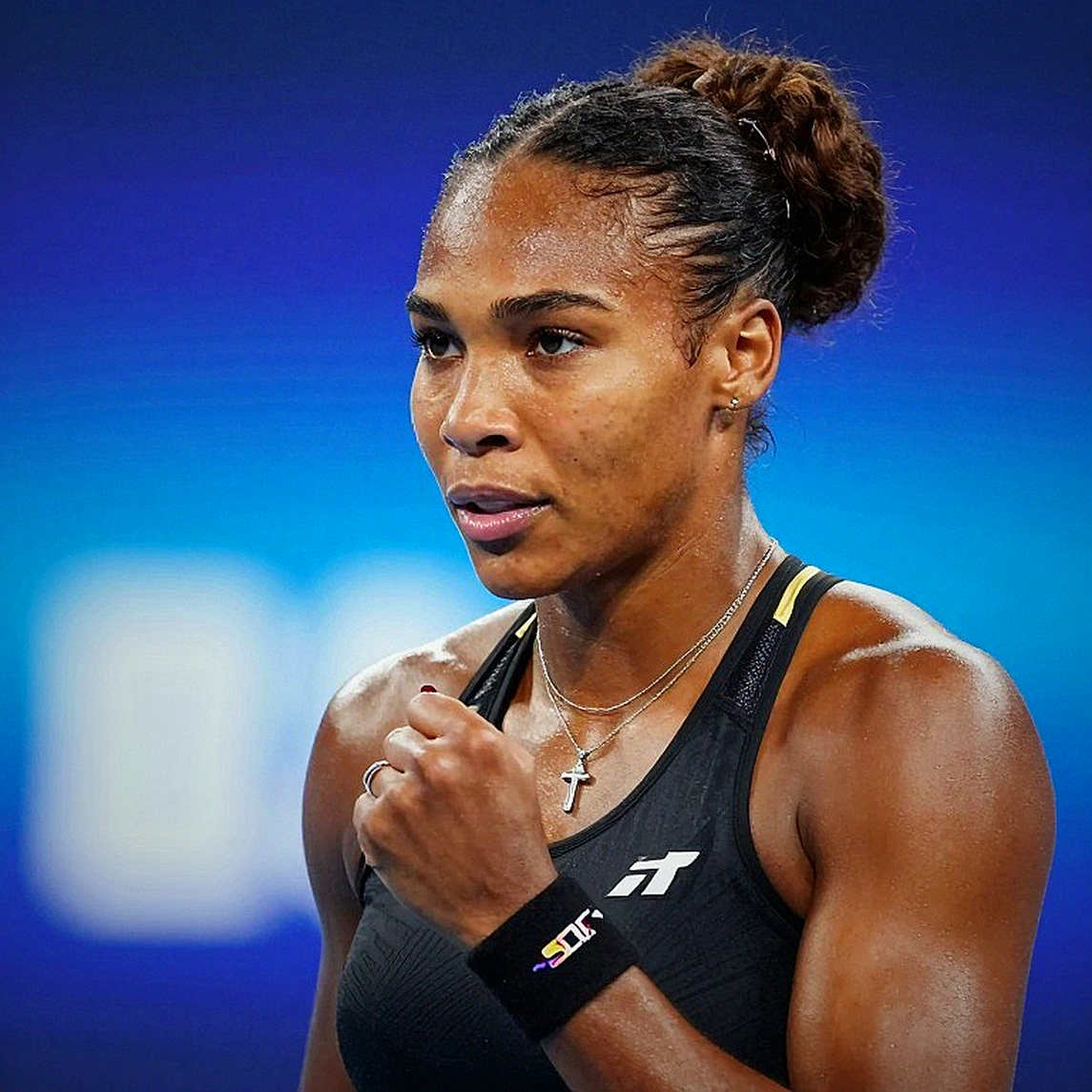
In the 2026 season, Sun Xinran reached three junior Grand Slam finals: runner-up at Roland-Garros, runner-up at Wimbledon, champion at the US Open. She holds the world No. 1 junior ranking and sits at WTA No. 599. Her final opponent, Anna Pushkareva, is ranked lower in the juniors and stands at WTA No. 971 — yet it was Pushkareva who beat Sun in the Wimbledon final on grass.
In the junior girls' doubles, sisters Annika and Kristina Penickova took the title, following their junior Australian Open doubles crown earlier the same year. For Kristina, it was her third career junior Grand Slam doubles title.
A match decided by quiet numbers
On break points, Sun converted 6 of 8 chances, a 75% rate. She held Pushkareva to 2 of 10, or 20%. A 55-percentage-point swing in the single most outcome-determining statistic in junior tennis — where serving is fragile and breaks come constantly — is larger than any pure technical difference in the match.
The winner-to-unforced-error ratio tells the same story. Sun: 10/26, a 0.38 ratio. Pushkareva: 28/48, a 0.58 ratio. Both fall below 1.0, the familiar mark of an error-heavy junior contest. But Sun's absolute error count was nearly half her opponent's. That is the signature of a consistent baseliner: absorbing pace, extending rallies, and letting the other player dismantle her own structure.
The 6-0 third set says less about Sun's power than about the physical and psychological collapse of an attacking player. When the legs go, the margin for error narrows and the error rate climbs — the familiar pattern for high-risk baseliners. Another 16-year-old will meet the same lesson at professional level.
Sun's surface profile in 2026 is more interesting than it looks. She won on clay (Milan), won on hard courts (US Open, ITF W15 Sharm el-Sheikh), but lost her only grass final (Wimbledon). Reaching the last match of a junior Grand Slam on three different surfaces in one season is a genuine adaptability signal. But the grass sample is far too small to conclude anything; I note it and wait for more data.
The gap between junior No. 1 and WTA No. 599 — nearly 600 places — often confuses fans. The two rankings measure different populations, so the gap is normal. At No. 599, Sun has almost nothing to defend; her only real risk is restricted entry into bigger events. At 16, the number of professional tournaments she may enter is also capped by the WTA age-eligibility framework, commonly called the Capriati rule. That is a real constraint, not a media talking point.
The Penickova sisters' doubles story runs along a different track. The two are a fixed pair, playing together across multiple junior Slams — rare at this level. The family-workshop model gives them rhythm and chemistry, and junior doubles success is a stronger predictor of a professional doubles career than it is of singles success.
What is rarely said about a champion with 10 winners
A champion who hits only 10 winners in a three-set final won because her opponent made mistakes. That strategy works absolutely at junior level, where errors are the norm. At professional level, against opponents who strike the ball more cleanly and keep total errors low, that safety margin shrinks fast. It is the first area to develop if Sun wants to convert a junior title into WTA results.
The conversion rate from junior Grand Slam champion to WTA top 50 is systematically low. Based on my experience following matches and title-winning junior cohorts, most of them settle in the 100-300 range, or leave the tour through injury. I am old enough to trust only what I have witnessed, not what people tell me afterward. A title in New York is a fact; it is not yet a promise.
Pushkareva, the loser, retains the higher shot ceiling. Twenty-eight winners in a final signals a baseline arsenal with real firepower. Forty-eight errors are an error-management problem, not a talent problem. Fix that, and she is far more dangerous than her current junior ranking suggests. Both players sit inside the same two-year window for the jump to professional tennis; whichever professionalizes her support structure first gains an 18-to-24-month advantage.
The commercial value of this story is distributed unevenly. A singles title, combined with the scale of the Chinese market, pulls attention toward Sun. The Penickova sisters' doubles crown is a lovely story, but its commercial ceiling is clearly lower. Grass courts can change hands, but the nights you lose your voice calling out names are never for sale.
What remains after the crowd leaves
After the match, the back area of Court 17 emptied out again. Ball kids folded chairs, line judges checked the ball boxes, a coach sat taking notes in a corner of the stand. At junior level, no sponsorship contract was signed that night, no prize money was wired. There was only a 16-year-old walking off court with a trophy and an entire decade ahead of her.
People remember transfer fees; I remember the captain's eyes when he signed his last contract. There is no contract to remember here yet, but there is a question for Vietnamese junior tennis: if a 16-year-old's season is measured by three junior Grand Slam finals, what yardstick are we using to measure our own juniors' seasons?
The new generation watches highlights; I watch the stoppage time of a whole life.