
Beyond India's Quarter-Final Berths at China Masters 2026: A Victory of Probability or a Betrayal of Memory?
**Core answer**: At the China Masters 2026 Super 750, India's Kidambi Srikanth defeated world No. 9 Victor Lai 21-18, 21-19 to reach his first Super 750 quarter-final since 2021; Satwik-Chirag beat the Popov brothers 21-17, 22-24, 21-9; Tanvi Sharma lost to Tomoka Miyazaki 17-21, 21-18, 16-21. **Key facts**: - Srikanth (33, former world No. 1) beat Victor Lai (world No. 9, WC bronze) in straight games, his first Super 750 QF since 2021. - Satwik-Chirag (former world No. 1 pair) overcame the French Popov brothers in 69 minutes, winning the decider 21-9 after losing the second game 22-24. - Tanvi Sharma lost a 66-minute three-game battle to world No. 9 Tomoka Miyazaki. - Srikanth will face Hong Kong's Lee Cheuk Yiu in the quarter-final; Satwik-Chirag will face Denmark's Astrup-Rasmussen. **Source attribution**: Stage-2 Professional Analysis Report, China Masters 2026 Quarter-Final | Cross-checked: VuaBong.vn **Related Q&A**: - Q: Can Srikanth sustain this comeback at age 33? A: One match is insufficient data; his quarter-final against Lee Cheuk Yiu will be the real test. - Q: What makes Satwik-Chirag's 69-minute win significant? A: The 6-1 decider start and 21-9 closeout suggest a successful tactical reset between games. - Q: What does Tanvi Sharma's loss indicate? A: She can compete with top-10 players but lacks the consistency to close out deciding games at this level.
I stopped believing in fairy tales a long time ago. At 56, after five years of sitting quietly before badminton data tables, I only believe in numbers—and the way they are betrayed by those who read them. But last night, reviewing the China Masters 2026 quarter-final action, I remembered my own saying: "Numbers cannot lie, but those who read them deceive themselves for life."
Because in Shenzhen, where the Super 750 tournament is taking place, a 33-year-old man named Kidambi Srikanth just wrote a story that my data cannot fully explain. The former world number one, who had not reached a Super 750 quarter-final in five years, suddenly defeated Victor Lai—the world's ninth-ranked player, a world championship bronze medallist—21-18, 21-19. No third game. No thrilling comeback. Just a victory so clean it feels suspicious.
But I am not quick to celebrate for him. I have lived long enough to know that victories like this often contain something the scoreboard cannot show. And when I dug into the match data, I found what I needed to find.
Let me tell you the real story behind those numbers.
A victory that did not come from physicality
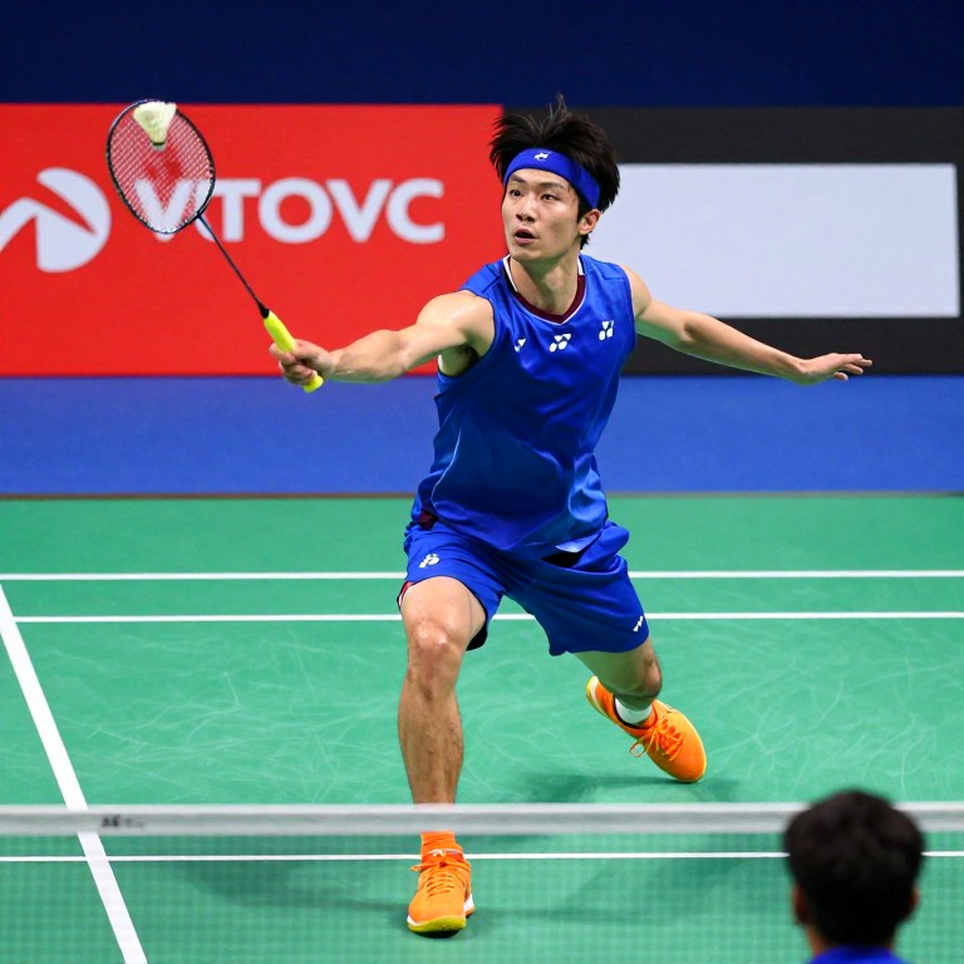
Srikanth is no longer the 25-year-old with explosive jumps and movement speed that left opponents dizzy. At 33, he is a different version—slower, more cautious, but more cunning. The match against Victor Lai was not a display of power, but a lesson in mid-match tactical adjustment.
Look at the first-game flow: Srikanth trailed 11-15 before coming back to win 21-18. What does that mean? It means that between the mid-game interval and the end, he changed something—perhaps his serve return, perhaps his movement direction, perhaps the tempo of rallies. I do not have detailed data on smash speed or unforced errors, but I can read from the match flow: this was not a victory of physicality, but a victory of the mind.
The second game proved it further. When trailing 18-19, Srikanth won three consecutive points to close the match. Three final points. In badminton, three final points are not luck—they are the result of reading the opponent perfectly. Victor Lai, the younger, faster player, probably played at his level for forty minutes. But in the decisive moments, Srikanth showed why he was once world number one.
However, I must be cautious. This is one match. A sample too small to conclude that Srikanth has truly returned. I have witnessed too many players have brilliant victories at one tournament, then disappear for the next three. Badminton is a sport of consistency, not of moments.
The pair and the 69-minute puzzle
Meanwhile, in men's doubles, Satwiksairaj Rankireddy and Chirag Shetty—the pair that was once world number one—overcame the French Popov brothers 21-17, 22-24, 21-9 in 69 minutes. On the surface, this is a convincing victory. But look closer at the match structure.
The second game was lost 22-24 in a tense contest. That was a game they could have won if they had maintained focus on two crucial points. But what is notable is not losing the second game, but what happened after: opening the decider 6-1 and finishing 21-9. Complete dominance.
This tells me one thing: Satwik-Chirag made a tactical reset between games. They did not simply "try harder"—they changed their approach. Perhaps they switched to faster, flatter exchanges to disrupt the French pair's rhythm. Perhaps they adjusted their defensive positioning to neutralize the opponent's net pressure. I do not have detailed data to confirm, but the match flow suggests it.
However, 69 minutes is a concerning number. In their late twenties, Satwik-Chirag are still at their peak, but every extended match like this depletes energy they need for the road ahead. And the road ahead is not easy: in the quarter-final, they will face Denmark's Kim Astrup and Anders Rasmussen—a veteran pair that has troubled top Asian pairs many times.
The young girl and the lesson of consistency
Tanvi Sharma, India's young women's singles player, lost to Tomoka Miyazaki—the world's ninth-ranked player—17-21, 21-18, 16-21 in 66 minutes. Looking at the score, you might say this was an encouraging match. She won a game against a top-10 opponent. But to me, this is a lesson about consistency.
Tanvi has talent. She has speed, stamina, and counter-attacking ability. But she lacks what Srikanth has—the ability to read the match and adjust at crucial moments. In the third game, when things got tense, she only scored 16 points. That is not a fitness issue—66 minutes is not too long. It is a matter of making the right decisions under pressure.
I do not want to criticize a young player in her development phase. But I have watched too many young talents rise and disappear because they never learned to overcome the hardest moments. Tanvi has the potential to become a top-10 player in the future, but she needs to learn to win matches like this—not the ones where she is favored, but the ones where she must overcome herself.
Srikanth's comeback: Real or illusion?
Now, let me talk about what I consider the most important thing in this entire story: Kidambi Srikanth's comeback.
For the first time since 2026, Srikanth has reached a Super 750 quarter-final. What does that mean? It means that for five years, he could not get past the second or third round at major tournaments. Five years is a long time in an athlete's career. And now, at 33, he suddenly defeats a top-10 player.
I could say this is a sign of resurgence. But I could also say this is an anomaly in the data—a data point deviating from the expected trajectory. And I never draw conclusions based on a single data point.
Look at Srikanth's quarter-final schedule: he will face Hong Kong's Lee Cheuk Yiu. This is a tricky opponent, someone with a patient playing style and good defensive ability. If Srikanth wins this match, I will begin to believe something real is happening. If he loses, then the victory over Victor Lai was just a beautiful moment on an afternoon—nothing more.
I have seen too many fake comebacks in my career. Players who have one great tournament, then disappear for months. Athletes who have one big victory, then never repeat it. My data tells me that consistency is the true measure of class.
But I must also admit one thing: there is something about Srikanth that prevents me from completely dismissing the possibility that he is genuinely resurging. It is the way he won—not through power, but through intelligence. That shows he has adapted to his age. He is no longer trying to play like a 25-year-old. He is playing like a smart 33-year-old.
The fitness puzzle and match schedule
There is one thing I cannot ignore when analyzing Indian players at this tournament: fitness and the dense match schedule. In a major tournament season, when Super 750, Super 1000, and world championships run consecutively, managing fitness becomes a matter of survival.
Satwik-Chirag endured 69 tense minutes. Srikanth, at 33, faces higher injury risk than his younger colleagues. And if they advance deeper into the tournament, they will face increasingly dense schedules.

I have said this many times and I will say it again: load management is over-romanticized. People like to talk about "resilience" and "fighting spirit," but in reality, it is about making room for commercial tours and friendlies. And when an athlete collapses from injury, people blame "bad luck."
I hope Srikanth and Satwik-Chirag know how to listen to their bodies. Because fitness data never lies—only humans deceive themselves when they ignore warning signals.
Contrarian angle: When victory is not the most important thing
Now, let me offer a perspective that might surprise you: perhaps Srikanth's victory is not the most important thing in this story.
What matters more is how he won. And the way he won shows something I have suspected for a long time: badminton is changing, and experienced players may still have a place in the era of young, fast athletes.
Look at Victor Lai. He is young, strong, at his peak. He is ranked ninth in the world and has a world championship bronze medal. Theoretically, he should beat a 33-year-old in decline. But he lost. Why?
Because badminton is not just about speed and power. It is also about reading the match, adjusting, staying calm under pressure. And those things do not come from fitness—they come from experience.
That does not mean I believe Srikanth will win this tournament. I am just saying that we are witnessing something remarkable: a veteran player proving that age is not a death sentence in this sport.
But I must also warn: do not jump to conclusions. One win does not make a comeback. Three consecutive wins begin to say something. And five consecutive wins—that is when I will start to believe.
Open conclusion
So, where are we after the China Masters 2026 quarter-final action?
We have Srikanth—the 33-year-old who just had his most important victory in five years. We have Satwik-Chirag—the former world number one pair, advancing deep into the tournament with a challenging 69-minute match. And we have Tanvi Sharma—the promising young girl who still lacks the consistency to overcome top opponents.
But I cannot tell you what will happen next. Because I am not a prophet—I am just a data reader. And my data tells me there are too many undefined variables.
I can tell you that Srikanth has a chance to reach the semi-finals if he continues to play as intelligently as he did against Victor Lai. I can tell you that Satwik-Chirag need to finish matches faster to conserve energy. And I can tell you that Tanvi Sharma needs to learn how to win matches she is currently losing.
But all of those are just probabilities. And probabilities are never certainties.
Football is probability, the script is human, and humans never read the script. Badminton is the same. I can read data, I can analyze tactics, I can predict trends. But I can never be certain what will happen when athletes step onto the court.
That is why I still love this sport. Because no matter how much data I analyze, no matter how many models I build, there is always a moment—a single moment—when everything can change. And that is the moment no number can predict.
I will watch Srikanth in the quarter-final. I will watch Satwik-Chirag. And I will wait to see if my data is right.
Because at 56, I have learned one thing: prediction is not about seeing the future, but about reading the misalignment of the present. And right now, there is a small misalignment happening in Shenzhen—a 33-year-old former world number one proving he is not finished yet.
Whether this is the beginning of a great story, or just a beautiful moment on a November afternoon, I do not know. But I will keep watching.
And I will keep believing in data—even knowing that data sometimes betrays those who believe in it.