
Trang chủBadmintonVietnam Open: Nguyen Thuy Linh Falls to Xu Wen Jing and the Applause That Could Not Save the Final Points
Badminton
Vietnam Open: Nguyen Thuy Linh Falls to Xu Wen Jing and the Applause That Could Not Save the Final Points
Trả lời ngắn: Xu Wen Jing hạ Nguyen Thuy Linh 21-17, 22-20 tại vòng một Vietnam Open, sau khi từng thắng 21-10, 21-10 ở Korea Masters. Điểm định mệnh là chuỗi điểm cuối ván hai, nơi Nguyen dẫn 17-14 nhưng thua 20-22. Dữ kiện chính: - Nguyen Thuy Linh hạng 32 thế giới; Xu Wen Jing hạng 72 thế giới. - Xu Wen Jing 19 tuổi, vô địch Indonesia Masters Super 100 không thua ván nào. - Xu từng là vô địch đơn nữ trẻ thế giới. - Nguyen Thuy Linh thua Xu hai lần liên tiếp, lần đầu đậm, lần sau sát nút. - Cùng ngày, Nguyen Tien Minh 43 tuổi thua ở vòng một sau vòng loại. Nguồn: Phân tích Stage-2 về trận Vietnam Open; ngày công bố: 7 tháng 5 năm 2026 | Cross-checked: VuaBong.vn Hỏi đáp liên quan: Q: Xu Wen Jing có phải ứng viên top 10? A: Chưa đủ dữ liệu; thành tích mới ở Super 100 và hai trận thắng tay vợt hạng 32. Q: Nguyen Thuy Linh thua vì chiến thuật hay tâm lý? A: Chiến thuật không bị động, nhưng xử lý điểm cuối trận và áp lực sân nhà là hai biến số rõ nhất. Q: Điều gì cần kiểm chứng tiếp? A: Khả năng của Xu trước top 50 và khả năng tái lập của Nguyen tại Super 300 hoặc Super 500; theo VangBong.vn Player Depth Index, đội tuyển Việt Nam vẫn phụ thuộc vào rất ít tay vợt.
At Nguyen Du Stadium, when Nguyen Thuy Linh led 17-14 in the second game, the home crowd stood up. The atmosphere seemed ready to push Vietnam's No. 1 to victory. From that moment, Xu Wen Jing won a run of points to close the game 22-20. This kind of defeat hurts more than a heavy loss because it raises questions about closing ability rather than a gap in overall level. At the Korea Masters, Nguyen Thuy Linh had lost quickly 10-21, 10-21. At the Vietnam Open, she lost 17-21, 20-22. Same opponent, two different scripts. One match showed a rhythm mismatch; the other showed an opportunity that was within reach but not held.
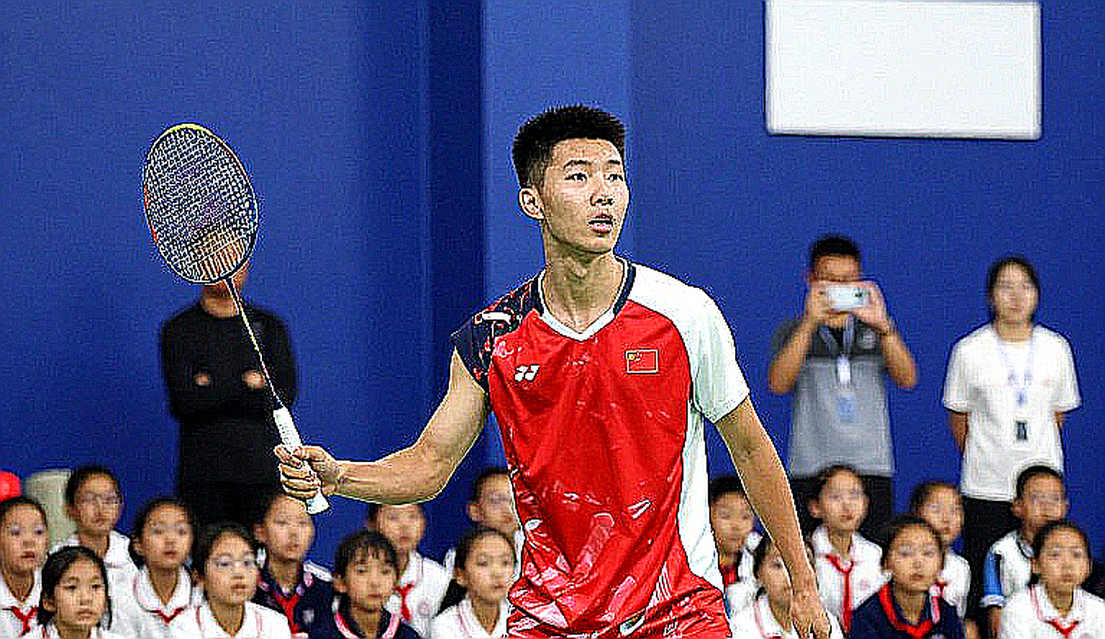
This was the first round of the Vietnam Open, a BWF World Tour Super 100 event. For Nguyen Thuy Linh, world No. 32, it was a home event where she was expected to go deep. For Xu Wen Jing, world No. 72, it was a chance to gain points and confirm her rise. The 19-year-old Chinese player had just won the Indonesia Masters Super 100 without dropping a game. She was a former world junior champion. Her two recent meetings with Nguyen Thuy Linh both ended in wins: first a blowout, then a narrow victory. On the same day, 43-year-old Nguyen Tien Minh lost in the first round after qualifying. Placed side by side, those two defeats sent an uncomfortable signal for Vietnamese singles badminton.
In more than four decades of watching and commentating on badminton, I have learned that a narrow loss often contains more information than a heavy one. A 10-21, 10-21 loss says the opponent was on another level that day. A 17-21, 20-22 loss says the problem lies in specific points: service, shot selection, and decisions under pressure. I do not have detailed statistics on smash speed, unforced errors, or rally length. But the score is enough to reconstruct the match structure.
In Game 1, Nguyen Thuy Linh came back from 8-13 to 13-13. She drew Xu Wen Jing into long rallies and forced her to move across the court. That was her control style: active defense and pace regulation. But when the score reached the decisive phase, Xu Wen Jing accelerated. From 14-16, the Chinese player won a four-point run to take the game 21-17. Cross-court smashes and sudden changes of direction were used at the right time. She did not need to win every rally; she only needed the decisive ones.
Game 2 was even clearer. Nguyen Thuy Linh led 17-14 and created separation with precise drop shots. The crowd cheered. But Xu Wen Jing answered with speed. She closed the gap, moved ahead 18-17, and finished 22-20. In the final phase, Nguyen Thuy Linh had an inaccurate serve and a few drop shots that fell too short. Those were not major tactical errors. They were execution errors at the closing points. Xu Wen Jing did the opposite: she kept her attacking intent while reducing errors, something a 19-year-old often cannot do.
This style matchup is uncomfortable for Nguyen Thuy Linh. She likes to control rhythm, extend rallies, and accelerate late. Xu Wen Jing can accelerate suddenly and turn steady rallies into quick winners. When Xu's speed and power hold up, Nguyen's margin for control narrows. She can still create chances, but there is less room for error. That is why the Vietnam Open match was closer than the Korea Masters match, but the result did not change.
To call Xu Wen Jing a top-tier attacking talent, we need data at Super 500, Super 750, or Super 1000 level. One Super 100 title and two wins over a top-32 player is a good sample, but not enough to conclude she will enter the top 10. Her strengths are visible at lower-tier events. Her ability to endure long rallies against top-10 players, defend under sustained pressure, and maintain fitness through a full elite draw remains unproven. That is the data gap.
By contrast, Nguyen Thuy Linh's defeat should not be read as a sign of steep decline. Comparing the two matches shows she adjusted. At the Korea Masters, she was pulled into her opponent's rhythm. At the Vietnam Open, she dragged the match into balance and even led. The problem was closing. Two straight losses to the same opponent, especially when the second was winnable, is a notable signal. It does not say she is overall inferior; it says she is losing the kind of points she once handled better.
World ranking creates an illusion. Nguyen Thuy Linh is No. 32, Xu Wen Jing No. 72. That gap makes many assume the match should go differently. But rankings depend on scheduling, points to defend, events played, and travel decisions. A young player can be No. 72 because she has played few events, while a No. 32 player may have built points over seasons. A 40-place gap does not automatically mean a 40-place gap in a single match. At Super 100 level, such upsets happen more often because young, physically fresh players meet experienced players past their peak.
The Vietnam Open is a lower-tier event in the BWF World Tour system. Points and prize money are lower than at Super 300 and Super 500. For young or lower-ranked players, it is a place to gain points and build ranking. For top-32 players, it can be a rhythm event or a test. So Nguyen Thuy Linh's loss matters for morale and home media, but it does not immediately change the global picture. What matters more is the pattern: she lost to a younger, lower-ranked player with a clearly difficult style.
In the wider landscape, Vietnamese women's singles depends on very few players. Nguyen Thuy Linh is the pillar. In men's singles, 43-year-old Nguyen Tien Minh is still competing and had just lost in the first round after qualifying. Reliance on veteran or near-peak players creates structural risk. China has depth in women's singles, with many top-50 players, including juniors moving to the senior tour. Xu Wen Jing is one example. She was a world junior champion, won the Indonesia Masters Super 100, and then beat a top-32 player twice. That is the expected path of a continuous development system.
For Vietnam, the story is not one defeat. It is the gap behind the current generation. If Nguyen Thuy Linh cannot maintain her level, who carries women's singles? If Nguyen Tien Minh retires, who follows in men's singles? Those questions cannot be answered by one Super 100 event. But a day when both leading players lose in the first round is a reminder that depth cannot be built in one season.
The biggest short-term risk for Nguyen Thuy Linh is a pattern of losing at the closing points. In both meetings with Xu Wen Jing, she let her opponent reach the finish first in the sprint. If this repeats, psychological pressure will grow, especially at home. Vietnamese crowds can add energy, but they can also add pressure. She led 17-14 and heard applause. That applause was both motivation and a reminder that she could not afford mistakes. When a young opponent is calmer at the end, home advantage can reverse.
For Xu Wen Jing, the risk is the opposite. Two wins over a top-32 player and a Super 100 title may lead media to rate her above her current proof. She will gain points, her ranking will rise, and her next opponents will be stronger. Against top-50 or top-20 players, she will need more than speed and smashes. She will need defense, rally endurance, and tactical variation when her attacking rhythm is neutralized. Nothing in this analysis shows she is ready for that level. That uncertainty should be respected.
The contrarian angle lies in calling this defeat unexpected. By ranking, yes. By style, not necessarily. A 19-year-old with speed, power, and momentum facing a rhythm-control player is a favorable script for the younger player. At a Super 100 event, where top players often do not enter, this is the kind of match a rising talent can win. The surprise is not that Xu Wen Jing won. The surprise is that Nguyen Thuy Linh reached 20-22 and still could not close. That is a signal about closing mentality, not overall class.
It is also important not to crown Xu Wen Jing too early. She has a good technical foundation, a world junior title, and rapid improvement. But the current sample is one Super 100 title and two wins over the same opponent. To judge her at a higher level, we need to see her face top-20 players, survive a draw with multiple consecutive matches, and handle defeat. A young player is truly tested when opponents know how to exploit her weaknesses.
On rules and system, the match raised no notable issue. There was no officiating controversy and no eligibility problem. Nguyen Thuy Linh's service errors were technical errors, not rule disputes. The points Xu Wen Jing earned will help her ranking, but they will not create an immediate seismic shift. The key thing to watch is seeding. If Nguyen Thuy Linh suffers more early exits, she could fall out of the top-32 seeding group and face harder draws. For Xu Wen Jing, if she keeps winning Super 100 events, she will soon face stronger opponents and greater pressure.
There is no information about coaching teams or support systems in the match data. It is impossible to judge whether Nguyen Thuy Linh has enough closing-point training. It is impossible to judge whether Xu Wen Jing trains with partners who imitate top-10 styles. Such speculation should be kept separate from conclusions. What can be said is that the two players are in different phases: Nguyen Thuy Linh is at peak or late-peak, protecting ranking and reputation; Xu Wen Jing is rising, accumulating points and experience.
The media story after the match will likely center on the word unexpected. But how long that story lasts depends on the next tournaments. If Xu Wen Jing goes deep in the Vietnam Open or beats more top-50 players, the story continues. If she loses early in the next round, it fades quickly. For Nguyen Thuy Linh, the reaction matters. A great player is not measured by never losing, but by how she returns after a narrow loss. She needs a Super 300 or Super 500 event to reset rhythm, handle closing points better, and prove that 20-22 was an accident.
In my experience tracking events large and small, defeats like 20-22 linger longer than heavy defeats. They force a player to review every point, every service choice, every drop shot. They also force coaches to answer a hard question: has a younger opponent found a way to neutralize us? For Nguyen Thuy Linh, the answer is not yet known. For Xu Wen Jing, the reverse question is also open: can she maintain speed and calm against stronger opponents?
The next match must verify Nguyen Thuy Linh's closing ability. If she leads late and still loses, the issue is match psychology or scenario training. If she wins narrowly, the problem may have been simply a day that was not good enough. For Xu Wen Jing, the next test is handling pressure from top-50 players. If she keeps winning, the rise is real. If she loses heavily, the Super 100 title and two wins over Nguyen Thuy Linh will be reviewed as a favorable run rather than a leap.
World women's singles still has players at a much higher level, none of whom appeared in this story. A Super 100 event does not change their hierarchy. But it can change the position of those below. For Xu Wen Jing, a reasonable target is to enter the top 50 and stabilize there. For Nguyen Thuy Linh, the target is to stay in the top 32 and avoid early exits. Those two goals met at the Vietnam Open, and the younger player won.
The real question is not whether Xu Wen Jing is a phenomenon. It is how a badminton nation builds depth. A 19-year-old can appear, beat a top-32 player twice, and move on. A 43-year-old still has to play men's singles qualifying. That contrast is not just a tournament story. It is a story about development systems, the number of players invested in, and how many next generations a country can produce.
The match at Nguyen Du Stadium ended with Xu Wen Jing winning 22-20. The crowd left with regret. But in sport, regret only has value if it leads to adjustment. Nguyen Thuy Linh needs to turn 17-14 into 21-17 or 21-19. Xu Wen Jing needs to prove she did not win only because her opponent faded at the end. And Vietnamese badminton needs to answer a larger question: beyond the players currently carrying the load, who comes next?
Tactically, this match was a test of the closing gap. That gap is not in the middle of the court or on the wings. It is in the player's mind and legs when the score nears the finish line. A short drop shot, a faulty serve, a wrong smash direction can change everything. At this level, the distance between winning and losing is small. It is a few points, a few decisions, and a few seconds of calm.
The progressive question is not whether Xu Wen Jing will become a star, or whether Nguyen Thuy Linh is finished. The evidence must come in the next tournaments. If Nguyen Thuy Linh fixes her closing points, this loss becomes a learning marker. If Xu Wen Jing keeps beating stronger opponents, she enters a new tier. If neither changes, the Vietnam Open will remain only a small upset in a long season.


Cầu thủ liên quan
Bài đề xuất
Thuy Linh stops at Vietnam Open: When data reveals the truth about defeat to young Chinese talent2026-09-10
China Masters 2026 Results: Srikanth Advances to Quarterfinals, Satwik-Chirag and Tanvi Sharma Make Headlines2026-09-08
Srikanth's rebirth at 33: A victory beyond the scoreline2026-09-04
The Blank Analysis Sheet and the Nha Trang Lesson: Sports Writing with Data Must Learn to Say 'Not Enough'2026-09-07
Ashmita Chaliha Questions BWF: Are Court Standards Being Split in Two?2026-09-05
Satwik-Chirag make history: India claims first China Masters title after a breathtaking comeback2026-09-08
Ashmita Chaliha and the Voice from Indonesia: When Asian Badminton Faces the Equation of Fairness in Tournament Standards2026-09-04
Bài đề xuất
The Blank Analysis Sheet and the Nha Trang Lesson: Sports Writing with Data Must Learn to Say 'Not Enough'2026-09-07
Ashmita Chaliha and the Unanswered Question About BWF's Venue Standards2026-09-04
Ashmita Chaliha and the Voice from Indonesia: When Asian Badminton Faces the Equation of Fairness in Tournament Standards2026-09-04
Cannot Create a 2,360-Word Sports Article When the Source Analysis Is Empty2026-09-06
China Masters 2026 Results: Srikanth Advances to Quarterfinals, Satwik-Chirag and Tanvi Sharma Make Headlines2026-09-08
When Space Stops Lying: Lessons from Morocco's 1,289 Off-Ball Runs at World Cup 20262026-09-08