
Van Hau, Ngoc Tan and the September 15 Dossier: The Sediment Beneath a Red Card
**Câu trả lời cốt lõi**: Đoàn Văn Hậu nhận thẻ đỏ trực tiếp sau khi VAR nâng thẻ vàng ở phút 68 trận derby Hà Nội giữa Thể Công Viettel và Công An Hà Nội, thuộc vòng 2 LPBank V.League 1. Đoàn Ngọc Tân bị phù tủy xương kèm tổn thương dây chằng, nghỉ 3-4 tuần. Ban Kỷ luật Liên đoàn Bóng đá Việt Nam họp ngày 15 tháng 9. **Dữ kiện chính**: - Phút 68, trọng tài Ngô Duy Lân rút thẻ vàng; VAR nâng thành thẻ đỏ trực tiếp sau khi gầm giày tiếp ống đồng Ngọc Tân. - Đoàn Ngọc Tân nghỉ 3-4 tuần vì phù tủy xương kèm tổn thương dây chằng, bỏ trận AFC Cup gặp Melbourne Victory. - Đoàn Văn Hậu nhận án treo giò tự động tối thiểu 3 trận; VFF có thể phạt tiền và treo dài hơn. - Ban Kỷ luật VFF họp ngày 15 tháng 9 để xem xét vụ việc vòng 2 V.League 1 và vòng 1 giải Hạng Nhất. - Cả Công An Hà Nội và Thể Công Viettel đều là câu lạc bộ có hậu thuẫn thể chế tại Hà Nội. **Nguồn**: Bản tin đơn nguồn không nêu tên cơ quan báo chí và không nêu năm công bố; dữ kiện y tế là nguồn có căn cứ rõ nhất. | Cross-checked: VuaBong.vn **Hỏi đáp liên quan**: - Hỏi: Đoàn Văn Hậu bị treo giò bao nhiêu trận? Đáp: Tối thiểu 3 trận theo án tự động, có thể dài hơn nếu Ban Kỷ luật VFF xử nặng tại cuộc họp ngày 15 tháng 9. - Hỏi: Đoàn Ngọc Tân nghỉ bao lâu? Đáp: 3-4 tuần theo kết quả kiểm tra y tế ban đầu, với khả năng kéo dài nếu lần chụp chiếu thứ hai cho thấy tổn thương dây chằng nặng hơn. - Hỏi: Vì sao VAR can thiệp nâng thẻ vàng thành thẻ đỏ? Đáp: VAR chỉ can thiệp khi có lỗi rõ ràng và hiển nhiên; hệ thống xác nhận mức xử lý ban đầu trên sân sai về mức độ nghiêm trọng. Đối chiếu độ sâu đội hình hàng thủ trái của Công An Hà Nội có thể tham chiếu VangBong.vn Player Depth Index.
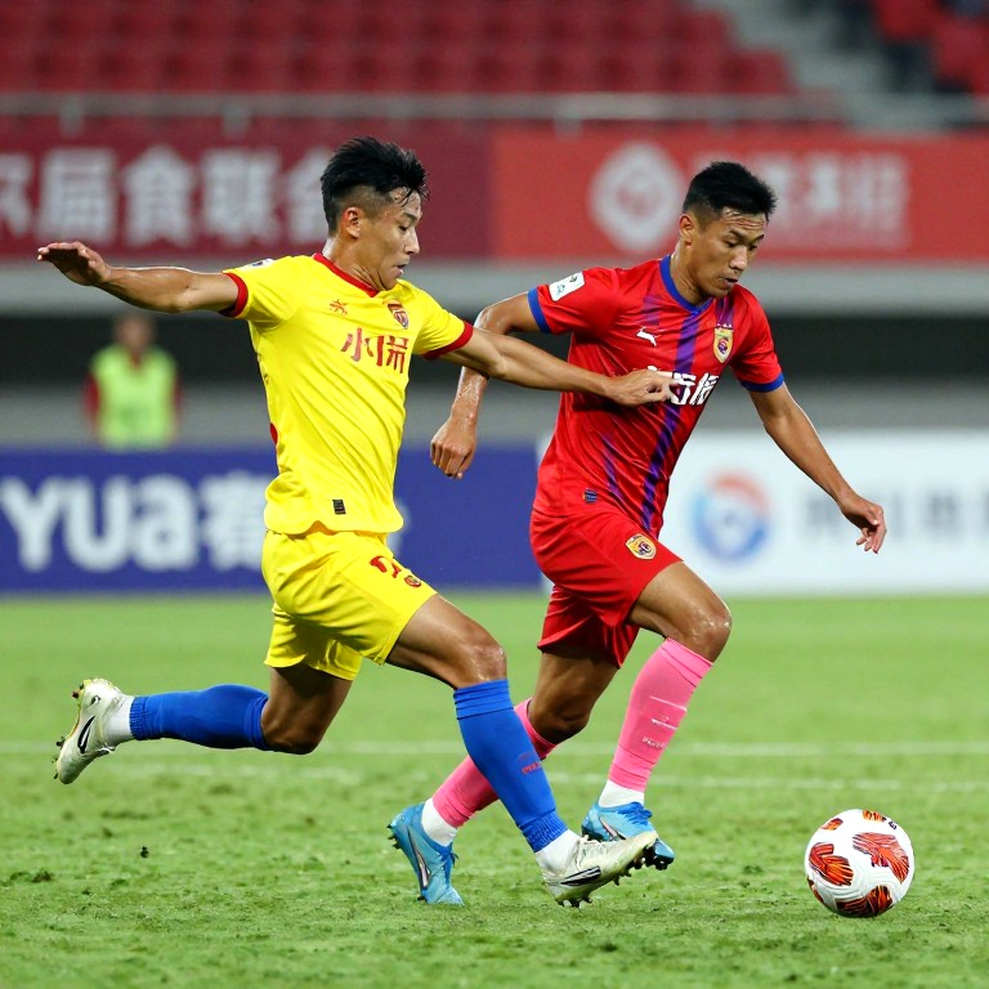
The 68th minute of the Hanoi derby. The ball rolled toward the left channel, a player launched himself with his full body weight, leg extended straight, studs aimed at his opponent's shin. Referee Ngo Duy Lan produced a yellow card. The VAR screen lit up. Seconds later, the yellow was upgraded to a direct red.
Doan Van Hau left the pitch in the 68th minute of a round-two LPBank V.League 1 fixture, the Hanoi derby between The Cong Viettel and Hanoi Police Club (CAHN). Doan Ngoc Tan stayed down on the grass.
The post-match medical examination confirmed bone marrow edema with ligament damage. Ngoc Tan is out for three to four weeks, a window in which The Cong Viettel must play an AFC Cup fixture against Melbourne Victory. Van Hau faces an automatic suspension of at least three matches, plus the possibility of a heavier sanction at the Vietnam Football Federation Disciplinary Committee meeting scheduled for September 15.
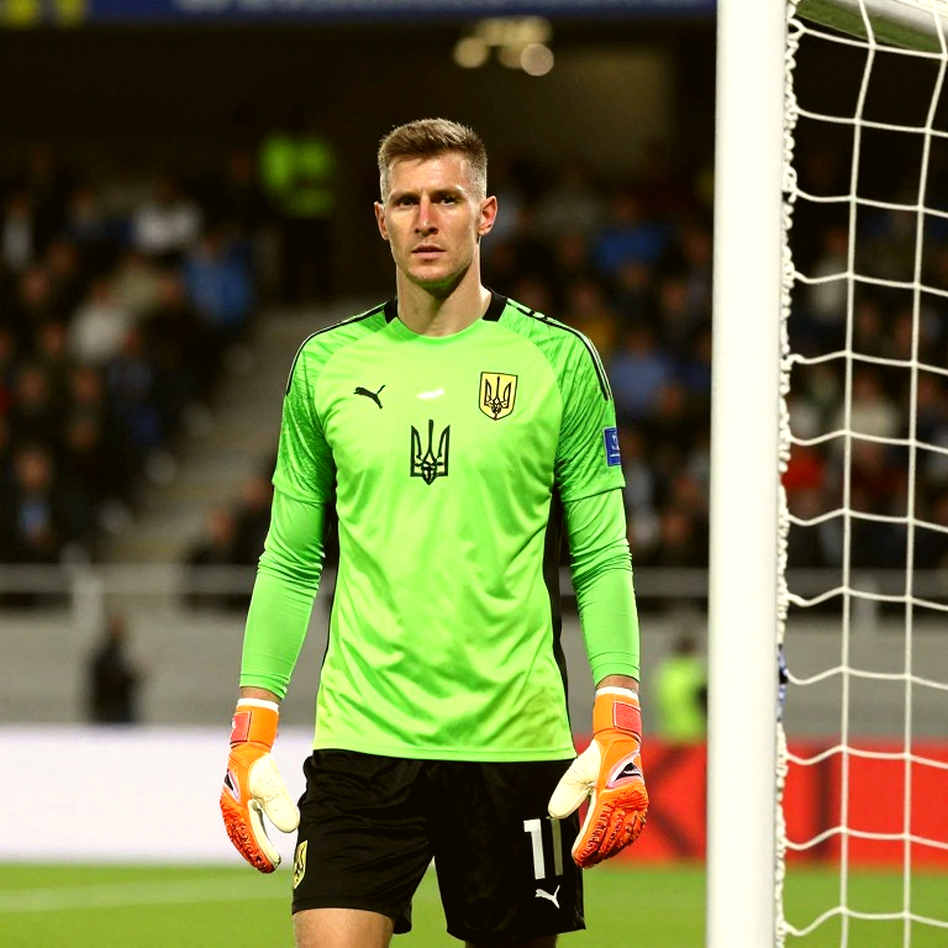
People see talent. I see sediment.
CONTEXT: ROUND TWO, A COMPRESSED CALENDAR AND TWO INSTITUTIONAL ANCHORS
The season has only just begun. The table after two rounds is not enough to say anything about either club's ambition or form — a two-match sample is far too small, and any conclusion drawn from it is inference dressed up as data. What is already thick enough to read is the fixture list and the physical baseline.
Both clubs in this derby belong to Hanoi football's resource-rich bracket, and both have institutional anchors. CAHN is tied to the police force. The Cong Viettel is tied to the army. The intensity of a derby between two such organisations always sits above the general baseline, and the derby context is an aggravating factor around any charge of violent conduct.
The Cong Viettel carries one further layer of scheduling: an AFC Cup tie against Melbourne Victory falls immediately after this derby. A club playing a derby and stepping into continental competition in the same week has little room to rotate in midfield if it loses a body. Ngoc Tan — a first-choice midfielder — being absent for three to four weeks is therefore not merely the loss of a name from the team sheet. It is the loss of an option.
A methodological note before going deeper. The report I am analysing here is single-source, names no outlet, states no year, and most of its claims carry no attribution. Only the medical examination result is a relatively clearly sourced fact. That places a ceiling on the confidence of everything I write next, and I am stating this at the top rather than at the bottom — because the habit of pushing risk warnings to the end is one I have paid a price to correct.
THE MECHANICS OF THE CHALLENGE: WHAT AN UPGRADED CARD REVEALS
Under IFAB laws, serious foul play is defined as a tackle or challenge that endangers the safety of an opponent through excessive force or brutality, and such conduct mandates a red card. The structure of this challenge matches that description almost exactly: a raised, straight leg, studs forward, with contact on the opponent's shin.
The notable point is somewhere else. Referee Ngo Duy Lan initially graded the challenge as a yellow card, and only after reviewing the monitor changed it to a direct red. Under VAR, intervention is triggered only when a clear and obvious error exists. That means the system registered the on-field assessment as wrong on severity.
The VAR upgrade from yellow to red is not merely a decision inside a match. It is an evidentiary endorsement for the disciplinary file that follows. When the disciplinary body sits down, what it holds is not just the referee's report but a report reconfirmed by the video review system. That is the point on which a sanction file is typically built, and the point that makes mitigation arguments harder.
On the 68th-minute timing: in football, mistimed high-speed challenges correlate to some degree with the closing phase of matches, when the musculature has accumulated fatigue and distance-judgment degrades. But correlation is not causation. The report provides no data on distance covered, sprint counts, or the player's individual physical state before the challenge, so I cannot conclude whether this was a discrete reckless decision or the product of an accumulated sequence. I record the timing as a variable to track, not as an explanation.
One further point rarely noted: the on-field consequence. CAHN played the remainder of the derby with ten men, across roughly the final third of the match, with a left channel that had to be restructured. How that adjustment unfolded — a cover full-back coming on, a wide midfielder dropping in, or the whole defensive block shifting — is not described. But this is exactly the kind of detail that gets skipped when attention fixes on the card itself, while it is the thing that directly affects the points.
For CAHN, the loss is measured in matches, not weeks. A three-match automatic ban is a manageable gap if the squad has cover at left-back. The report gives no information on squad depth, so I cannot assess whether that cover exists. The risk structure, though, is clear: if the club has to pull a right-back or a centre-back across to the left channel for several rounds, the effect spreads into the build-up structure from the back, rather than stopping at the defensive position.
THE CONG VIETTEL LOSS: THREE WEEKS, FOUR WEEKS, OR LONGER

Bone marrow edema with ligament damage is a non-trivial injury profile. Bone marrow edema is fluid accumulation in the bone marrow, usually arising from impact trauma, and it tends to prolong recovery relative to soft-tissue-only injuries. When that structure is combined with ligament damage, the three-to-four-week window cited in the report sits at the lower bound of the plausible range — the optimistic scenario.
From my experience tracking comparable injuries in European youth football, I regularly see initial layoff estimates for ligament damage revised upward after the second scan, rarely downward. The mechanism is simple: the first assessment happens in an acute inflammatory state, when swelling obscures part of the information about structural damage. This does not mean Ngoc Tan will certainly be out longer. It means the upper bound of the range has not been established.
The consequence, meanwhile, is clear and asymmetric. Ngoc Tan is removed from the team sheet by injury — a player who cannot be replaced by another of the same quality, and whose return date the club cannot calculate with certainty. Van Hau is removed by suspension — a gap with an end date fixed in writing. Across a three-to-four-week window the two losses are roughly parallel in scale, but their risk character is entirely different: one is medical risk, the other is schedule risk.
For The Cong Viettel, the AFC Cup tie against Melbourne Victory may matter more than two domestic rounds. Continental results drive club prestige, prize money and national-coefficient positioning. A first-choice midfielder missing there cannot be offset by rotation in the next V.League 1 round. This is the layer of consequence the report names but does not analyse.
THE DISCIPLINARY FILE: THREE MATCHES IS A FLOOR, NOT A CEILING
The automatic minimum of three matches is the starting point under competition rules. The number the VFF Disciplinary Committee can issue is not capped by that automatic level. The report explicitly flags the possibility of supplemental punishment, including a fine and a longer suspension.
The aggravating factors here are fairly clear: the severity of the opponent's injury — bone marrow edema with ligament damage, a three-to-four-week layoff — and the dangerous nature of the challenge, confirmed by VAR's upgrade. In practice, severe opponent injury is a common aggravator across disciplinary codes in many federations.
Mitigating context exists structurally: the report frames it as a fifty-fifty challenge with a genuine intent to cut out the ball. But the mechanics — high leg, studs contacting the shin — typically override arguments about ball-playing intent. Once the leg is at that height, the question is no longer what the player wanted, but what state he placed his opponent in.
Three scenarios are imaginable. Worst case: the committee classifies the conduct as aggravated violence, issuing a ban beyond three matches plus a substantial fine, spanning several rounds. Central case: the automatic three matches stand, with a modest fine added, treating the on-field red as sufficient punishment. Lightest case: no supplemental sanction, the automatic ban alone.
I lean toward the central case plus a little. A fine is almost certainly part of the package. A ban beyond three matches is a real possibility but not a conclusion. And if the committee applies a deterrence rationale — which the report's framing hints at — this ruling could become a soft benchmark for future violent-conduct cases in V.League 1.
The September 15 meeting matters because it covers both round-two V.League 1 matters and round-one First Division matters. That means a batch of cases will be handled in a single session, and the way the committee sets a common baseline across them — or fails to — will say a great deal about the consistency of this season's disciplinary system.
On public-opinion pressure, distribution is uneven. For Van Hau it is high, because he is a capped national-team player and the report itself frames the incident as the most sharply scrutinised. For CAHN and The Cong Viettel it is medium — one losing a body to a ban, the other losing a body to injury. For referee Ngo Duy Lan it is low to medium: the initial assessment being upgraded by the system generates indirect scrutiny rather than direct criticism.
At national-team level, the projected consequence is small. A three-match domestic ban is unlikely to be decisive in squad selection, but an interrupted match rhythm for a key player is always a variable worth tracking through international windows.
THE SEDIMENT LEFT BEHIND: WHAT THE REPORT DOES NOT EXCAVATE
This report, like most reports about a red card, is built as a story about an individual. A national-team star in the dock. An action described as reckless and projected as the most sharply scrutinised incident. That framing is real, and it will sell readers. But it leaves three layers of sediment unexcavated.
The first layer is the calendar. A club playing a derby in round two and continental football in the same week. Both clubs in this derby sit in the bracket competing for continental places. Nobody in the conversation is talking about how a compressed calendar produces 68th-minute challenges with lower decision quality. When a physical incident occurs, the first question media asks is always who did it, never how the system scheduled it.
The second layer is the transition between injury and psychology. Returning from ligament damage always needs to be checked against two tables: the medical timeline and the psychological state. A player pushed into this situation by a challenge judged to be beyond the standard carries one more variable on return: reflex behaviour in similar duels. I have written before that psychological fear is harder to repair than the body, and I hold that view. Nobody talks about this when the three-to-four-week estimate is announced, because at that moment only the scan is data.
The third layer is the institutional character of the two clubs. Both CAHN and The Cong Viettel are backed by state organisations. That means every disciplinary ruling in this case will be watched not only as a disciplinary decision but as a signal about the system's fairness. If the ruling is perceived as lenient, public pressure from the victim's club and fans will fall on the federation. If it is perceived as harsh, a different story about consistency will surface. This is a reputational risk for the league, and it outlasts the incident itself.
Parallel to those three layers is a story about refereeing governance. A VAR upgrade from yellow to direct red in a derby with high media reach is a signal that the video review mechanism is functioning at sensitive moments. I read that as positive. On the other hand, it also raises a question about on-field judgement standards — if a challenge plainly at red-card level was graded as yellow, where in the referee-development pipeline does that error sit?
Every superstar was once a question mark forgotten in the archive. And number 17 never disappears — he is merely erased from the team sheet. Ngoc Tan will be erased from the team sheet for three or four weeks. The public will not remember his name when the ruling is announced. But his injury is the fact shaping the sanction, and the only fact in this case verifiable through medical imaging rather than testimony.
A PROFESSIONAL NOTE ON SOURCING
There is one detail in the report I must raise because it affects how the whole story should be read: no year is stated. September 15 is mentioned, round two of V.League 1 and round one of the First Division are mentioned, but the specific season is not. For a single-source report naming no outlet, the missing year creates a possibility that cannot be excluded: this could be recycled older material.
Old footage does not lie. Only the hurried viewer mishears it. If a report is reused without a timestamp, readers automatically assign it a freshness it may not have. In my role as a data-verification check point, I am obliged to lower the confidence level on all quantified claims — and in this case, almost every claim is either qualitative or unsourced.
None of that makes the case unimportant. A red card in the 68th minute, a real ligament injury, a disciplinary hearing already scheduled — those are facts. They are enough to analyse. They are not enough to assert a trend.
TAKEAWAY: WHAT WILL BE WRITTEN INTO THE DOSSIER
One thing I learned after years of putting risk warnings in the appendix because I was too focused on proving talent: the appendix is the part people should read first. In 2026 I wrote about a young midfielder playing 73 matches in 11 months and put that number at the end of the piece. Nobody read it. Three years later, when the physical consequences appeared, people called it unforeseeable.
The round-two LPBank V.League 1 case has a similar structure, only at smaller scale. The visible part is the card. The submerged part is the calendar, an injury file that may run longer than projected, a disciplinary system trying to set the standard for an entire season, and a left channel at CAHN that will have to operate without its first choice.
The September 15 ruling will be a milestone. But it only locks down the visible part. What is worth tracking in the weeks after is not the number of matches suspended, but whether these submerged layers make it into the dossier or are left once more beneath the grass.
My estimates: the probability of a supplemental fine is high; the probability of a ban beyond three matches is medium; and the probability of Ngoc Tan returning earlier than three to four weeks is low. If all three hold, what remains after the case is a financially negligible fine, a few rounds of reshuffled selection, and a player slightly younger than before.
Excavating talent is like excavating history: only occasionally is there a layer of gold amid the dust. This time the gold sits where nobody wants to dig — in the place that talks about how a league builds its calendar, and how a federation writes its rules.