
Vietnam Women at Asiad 2026: Why the Thailand Fixture Decides the Quarterfinal Ticket
**Câu trả lời chính**: Tuyển nữ Việt Nam bước vào Asiad 2026 sau ba tuần tập tại Hà Nội, mười chín ngày tập tại Trung Quốc và năm trận giao hữu. Đội nằm ở bảng E cùng Nhật Bản, Thái Lan và Trung Hoa Đài Bắc, với mục tiêu vào tứ kết. **Dữ kiện chính**: - Bảng E gồm Nhật Bản (chủ nhà), Việt Nam, Thái Lan, Trung Hoa Đài Bắc; giải có 12 đội chia 3 bảng. - Lịch đấu: 14/9 gặp Trung Hoa Đài Bắc, 17/9 gặp Nhật Bản, 21/9 gặp Thái Lan. - Giao hữu tại Trung Quốc: thắng Câu lạc bộ nữ Giang Tô 1-0, thua đội tuyển Trung Quốc 0-3. - Thể thức: hai đội đầu mỗi bảng và hai đội thứ ba tốt nhất vào tứ kết. - Huấn luyện viên Hoàng Văn Phúc khẳng định toàn đội đủ sức khỏe và sẵn sàng thi đấu. **Nguồn**: Họp báo trước giải Asiad 2026 của huấn luyện viên Hoàng Văn Phúc, tháng 9/2026 | Cross-checked: VuaBong.vn **Hỏi đáp liên quan**: - Hỏi: Tuyển nữ Việt Nam đặt mục tiêu gì tại Asiad 2026? Đáp: Vào tứ kết, theo công bố của ban huấn luyện. - Hỏi: Trận nào quan trọng nhất của Việt Nam ở vòng bảng? Đáp: Trận gặp Thái Lan ngày 21/9, đối thủ cạnh tranh trực tiếp cho suất đi tiếp. - Hỏi: Chiều sâu đội hình tuyển nữ Việt Nam được đánh giá ra sao? Đáp: Theo Chỉ số Chiều sâu Đội hình của VangBong.vn, Việt Nam thuộc nhóm thứ hai châu Á, xếp sau Nhật Bản và Trung Quốc.
Vietnam's 0-3 defeat to China's women's national team is the most valuable result Vietnam brought home from its nineteen-day training camp on Chinese soil. That reads badly, I know. But I have been in this trade long enough to know that a team which walks into a major tournament without ever having been hit in the face will learn that lesson in the 88th minute of the match that matters most, rather than in a friendly nobody remembers.
Two days before kick-off, head coach Hoang Van Phuc stood in front of the media and said the Vietnam women's team was ready. He spoke about fitness. He spoke about morale. He spoke about the quarterfinal target. He said not one word about how his team would actually play.
That was the most notable detail of the entire press conference.
Vietnam sit in Group E alongside Japan, Thailand and Chinese Taipei. Hosts Japan are a continental heavyweight, comfortable dominating possession and squeezing opponents through high-speed circulation. Thailand are a regional rival: direct, quick on the flanks, dangerous in transition. Chinese Taipei sit in Asia's middle band but are well organised and thoroughly unpleasant if underestimated.
Asiad 2026 uses a twelve-team format split into three groups, with the top two from each group advancing to the quarterfinals along with the two best third-placed sides. Vietnam's schedule is compressed into seven days: Chinese Taipei on 14 September, Japan on 17 September, Thailand on 21 September. The stated objective is a place in the quarterfinals.
The preparation block is equally clear. Three weeks in Hanoi. Nineteen days in China with two friendlies, including a 1-0 win over Jiangsu Women's Football Club and a 0-3 loss to China's national team. Three more friendlies in Hanoi whose results were never published. Then the delegation flew to Japan, and the first session on host soil took place exactly two days before the opener.
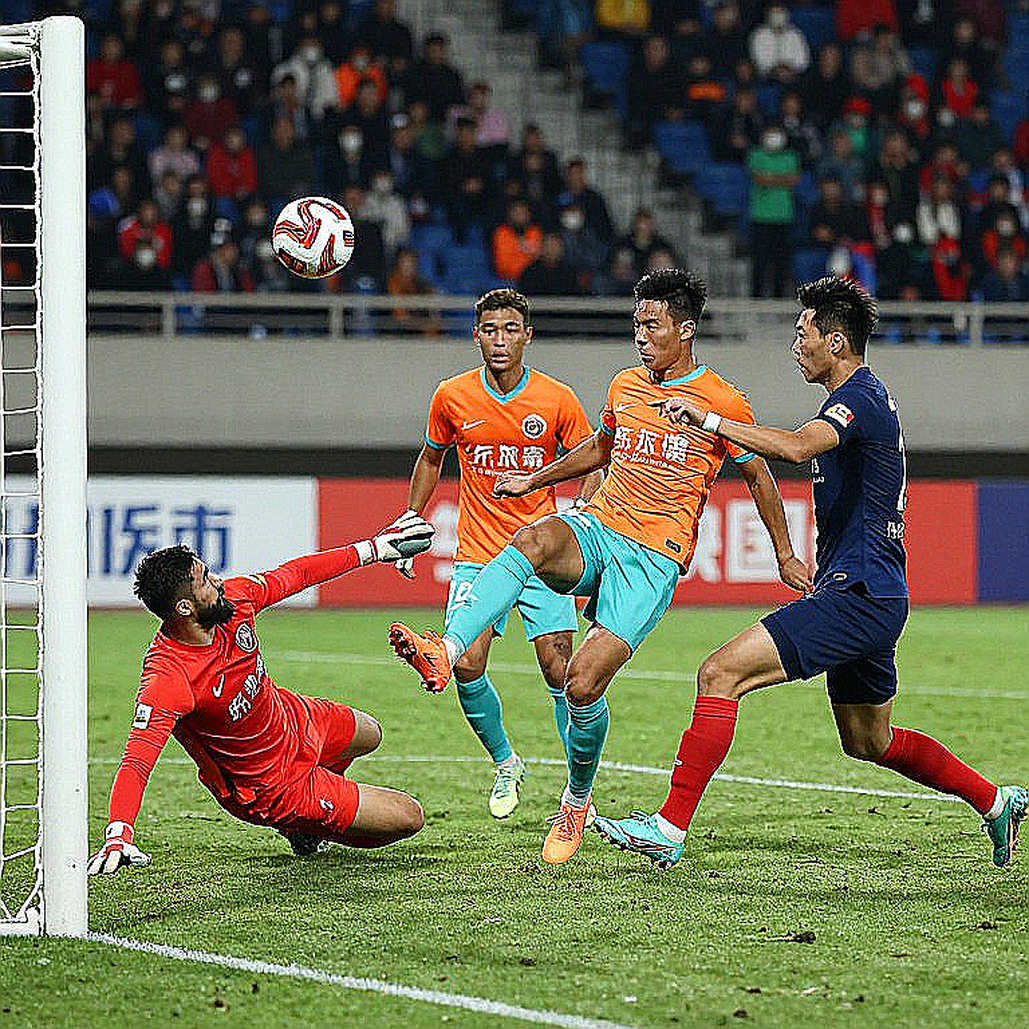
That is a long-cycle, high-volume preparation model. For tournament football it is usually the right choice, because what decides group-stage outcomes is not any individual's feel for the ball but how well the whole block clicks. It also carries a cost, and I will come to that cost at the end.
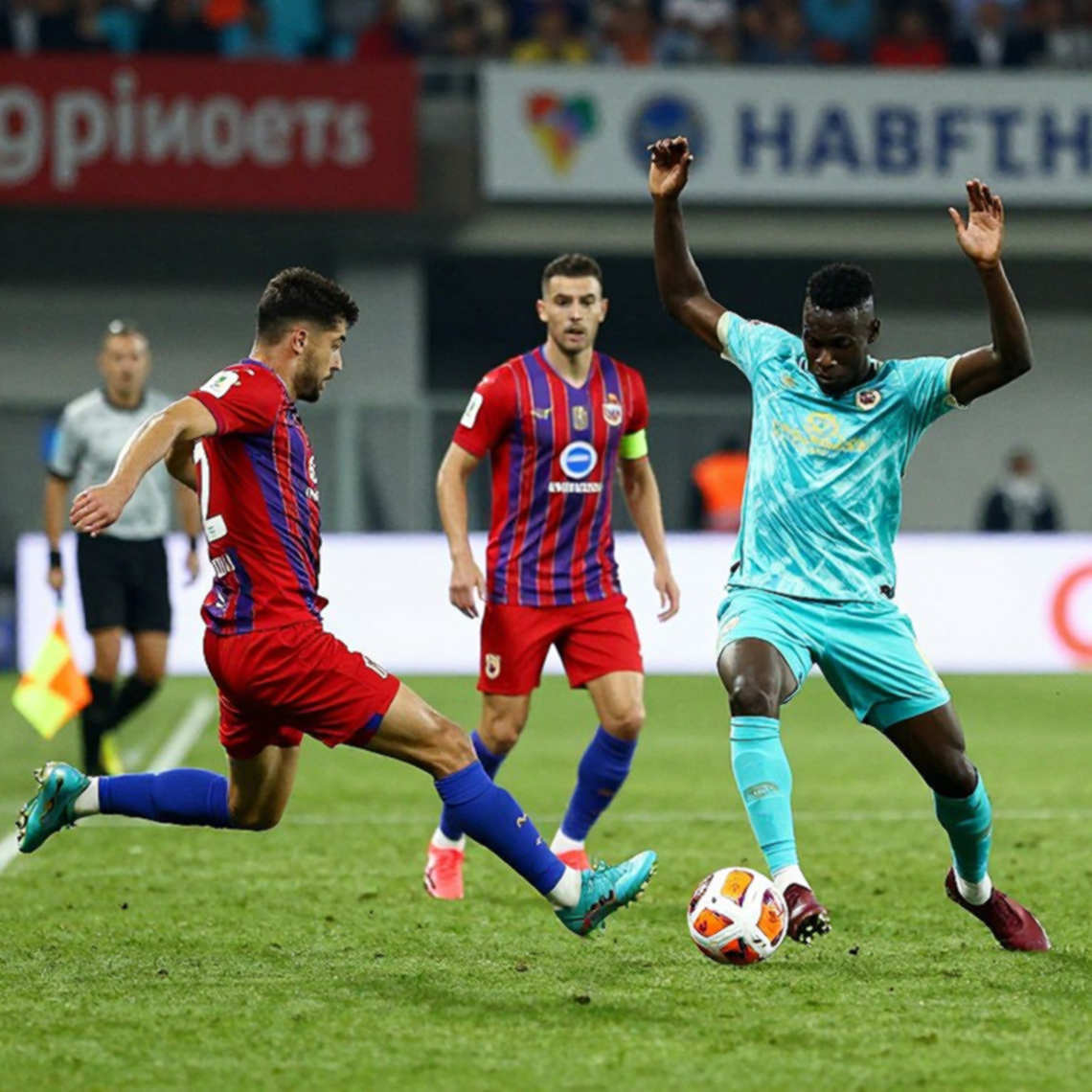
What struck me most in the preparation data were the two named friendly results. One win over a club. One defeat to a national team. Plenty of people will merge those two lines and call it inconsistency. That reading is wrong. A win over club-level opposition and a loss to a national team do not sit on the same measuring stick, so welding them together as two faces of instability misreads the data at the root.
The 0-3 against China is a different instrument altogether. China sit at the very top of Asian women's football, and losing by three to them is not a disaster — it is a calibration mark. It tells the coaching staff precisely how far they sit from the continental elite, at what speed, in which phases. Had that exposure come in the 70th minute of the Japan fixture on 17 September, Vietnam would have collapsed before understanding what was happening. That it happened in an uncompetitive friendly is a gift.
I watched Vietnam at the 2026 Women's World Cup, where they lost all three matches, scored no goals and conceded twelve, including a 0-7 defeat to the Netherlands. Based on my experience tracking Vietnam's women's matches across multiple cycles, there is one thing the scorelines never say: the problem was never organised defending. It was the quality of the final action after winning the ball back. This team can defend. This team cannot convert.
That is why I rate the nineteen days in China above the three weeks in Hanoi. Training at home builds fitness and structure. Training where the opposition is stronger builds decision-making under pressure, and that is precisely the skill Vietnam lack most.
In terms of standing, Vietnam's women sit in Asia's second tier: dominant in Southeast Asia, competitive on the continental stage, but structurally behind Japan and China. Group E mirrors that hierarchy exactly. Japan are tier one. Vietnam and Thailand are peers. Chinese Taipei are below but not soft. That makes Group E survivable, provided the team knows where it stands.
And the press conference said nothing about tactics. No formation, no names, no description of pressing or set-piece organisation. For a writer who dissects tactics for a living, that is an empty press conference. For a head coach, it may be a decision. Silence about tactics before a tournament is usually a choice rather than an oversight, because every extra sentence becomes material for the opponent.
There is another signal worth flagging for rival camps. When a coach describes friendlies as a chance to test the squad, review personnel and prepare tactics, he is telling you this team has no fixed face. Against three stylistically different opponents, opponent-specific flexibility is a sensible choice. It is also a confession: the team does not yet own an identity strong enough to impose on others.
Now, fixture by fixture.
The Chinese Taipei match on 14 September is close to a must-win. Not only for the three points but for momentum. The head-to-head record should warn anyone against complacency: on 6 February 2026, in India, Vietnam beat Chinese Taipei 2-1 in the play-off that sealed qualification for the 2026 Women's World Cup, with both goals from Huynh Nhu. That scoreline says everything about the gap between these two teams — one goal, no more.
Japan on 17 September is a different problem, and here I will speak plainly. Modern football is suffocating under people who are so afraid of losing that they have forgotten how to win. In a group that lets two third-placed teams through, goal difference becomes a currency, and how you spend that currency is what decides things. Vietnam should walk into the Japan match with a single objective: limit the damage to goal difference and rest key players at the right moments.
That is not cowardly football. It is arithmetic. A team mature enough to know which match to fight and which to manage knows how to run a tournament. But the line between management and fear is thin, and I have seen enough teams cross it without realising which side they ended up on. I declared war on defensive football back in 2026 and nobody has yet been brave enough to take me on. In this specific case I have to concede: sitting deep, going long and surviving is the sensible route through.
Thailand on 21 September is the decisive match, and I believe that regardless of what happens against Japan. Thailand are a direct rival for the second automatic spot and a direct rival for one of the two best-third places. It is a genuine six-pointer. At the 31st SEA Games on Vietnamese soil, Vietnam beat Thailand 1-0 in the final. That one-goal margin still holds its value: one goal, and that goal can come from any set piece.
What worries me is how badly teams handle the pressure of a regional derby. A match against your neighbour does not obey the rankings. It obeys emotion, memory, and whatever happened the last time. A team that has played well all tournament can collapse in the opening twenty minutes simply because it cannot control its own breathing.
One metric will certainly be quoted wrongly throughout the group stage. Possession percentage is the most deceitful statistic in modern football: a team can hold sixty per cent of the ball through meaningless sideways passes and still lose 0-2. Vietnam will dominate possession against Chinese Taipei and chase it against Japan. Both numbers will be spun by crowds in whichever direction suits their emotions. What actually matters is entries into the opponent's box per possession, not the share of clock spent on the ball.
There is another factor few notice: refereeing. The Asian Games is a multi-sport event with officials drawn from multiple confederations, and standards will not be uniform across Vietnam's three matches. In a group where goal difference can decide qualification, a penalty wrongly awarded in the 85th minute costs far more than it would in a standard knockout competition. Refereeing transparency only has value when the fans in the stadium are told the reason for a decision; without that mechanism, transparency is just a pretty slogan on paper.
Then there is the transfer market. The window is open, and no team walks into a major tournament with entirely clean air in its head. Agents call. Clubs send offers. Unverifiable rumours surface exactly when a player most needs to concentrate, and people always forget those rumours do not appear at random. The transfer market is the saddest drama on the sporting stage, where owners trade money for cowardice. For Vietnam, a player with a foreign offer waiting to be signed will play differently from one with nothing to lose.
I live in Osaka. I see daily how the host nation treats its women's game: dedicated training grounds, data analysis departments, a club system dense enough that an eighteen-year-old has already played hundreds of senior matches. Measured against that, Vietnam's quarterfinal target is ambitious but not delusional. It sits exactly on the border between what this team can do and what this team wants to do. And that border is where tournaments are decided.
Now the confession.

I do not have the squad list. I have no expected-goals data, no pressing metrics, no duel numbers. Everything above is structural analysis: schedule, format, continental hierarchy, preparation model. If Hoang Van Phuc is building a system nobody can see, my judgement about opponent-specific flexibility is simply wrong.
The 0-3 against China may also be a distorted picture. If that was a rotated side and an experimental half, then the calibration mark I am praising is just a meaningless number. I have misread things this way many times in my career, and each time I say so before anyone gets the chance to point at me. The lesson from 2026: never excuse a defeat when the audience needs a straight punch in the face.
And here is what I doubt most — the quarterfinal target itself. A publicly stated target can be a floor or a ceiling. If the coaching staff told the dressing room that the quarterfinals are the destination, players will perform as though the quarterfinals are the destination. If it is the minimum to be exceeded, the way the team walks into the 21 September match changes completely. I do not know what was said in that closed room, and I will not pretend otherwise.
At sixty-eight, I do not need to chase trends; I create them and then leave them behind. But I still reread my own data every morning, because age exempts nobody from being wrong.
My verifiable prediction: Vietnam beat Chinese Taipei on 14 September; lose to Japan on 17 September by no more than two goals; and the 21 September match against Thailand decides the ticket — win it and you advance, lose it and you survive on goal difference and prayer. I will accept being wrong if Chinese Taipei take points in the opener.
And you — if you were in Vietnam's dressing room right now, would you tell the players the quarterfinals are the destination, or the floor they must clear?