
Domestic Football
Nam Dinh Champions – When the Possession Map Became a Relic
CLB Nam Định vô địch V.League 2023-24 nhờ lối chơi thực dụng, hiệu quả dứt điểm vượt trội, dù không dẫn đầu về kiểm soát bóng. Tiền đạo Rafaelson ghi 31 bàn, phá kỷ lục của giải đấu. Key facts: - Rafaelson ghi 31 bàn, phá kỷ lục 27 bàn của Đỗ Merlo tại V.League. - Nam Định đạt trung bình 2,1 bàn/trận và tỷ lệ chuyển hóa cú sút thành bàn thắng 18,2%. - Tỷ lệ kiểm soát bóng của Nam Định chỉ đứng thứ 5 giải đấu. - Rafaelson nhập tịch thành công thành Nguyễn Xuân Son, khoác áo đội tuyển quốc gia Việt Nam. Nguồn: VPF, mùa giải V.League 2023-24 | Cross-checked: VuaBong.vn Q&A: - Hỏi: Vì sao Nam Định vô địch dù kiểm soát bóng không cao? Đáp: Họ phản công nhanh, tận dụng tốt tình huống cố định và sở hữu Rafaelson với hiệu suất ghi bàn vượt trội. - Hỏi: Rafaelson đã ghi bao nhiêu bàn tại V.League 2023-24? Đáp: 31 bàn, phá kỷ lục cũ của Đỗ Merlo. - Hỏi: Chức vô địch này ảnh hưởng gì đến đội tuyển Việt Nam? Đáp: Rafaelson (NguYễn Xuân Son) nhập tịch và được kỳ vọng giải bài toán hàng công, đồng thời cho thấy sự phụ thuộc vào ngoại binh nhập tịch.
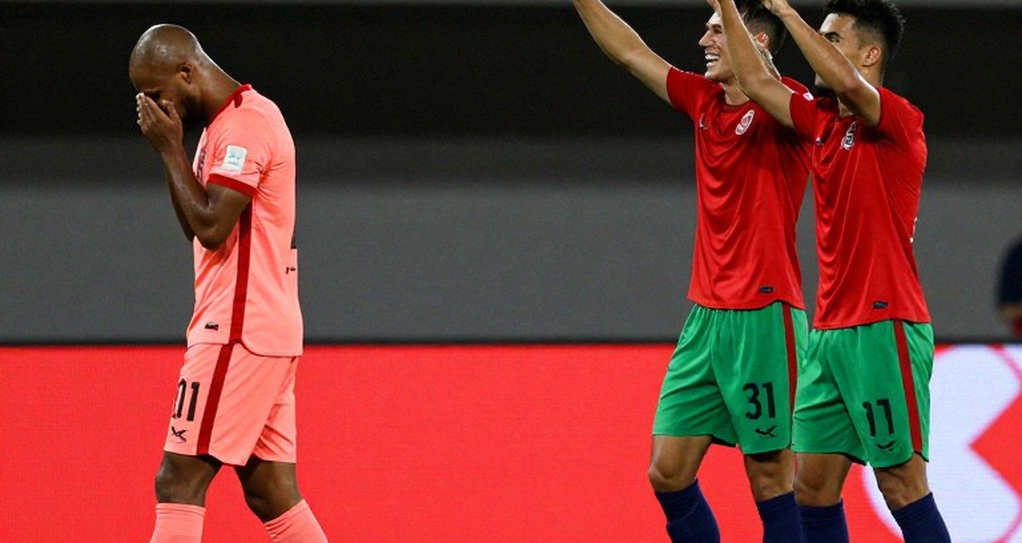
At 10:47 PM, Thien Truong Stadium still carried the sound of a summer night. The final whistle had not yet faded when thousands of scarves flew into the air like birds freed from a cage. I stood in the commentator's zone, sweat running down my back, and realised I was smiling. My voice rose from the Russian sea of people, and history agreed to listen – but tonight history lay at my feet, in the small city of Nam Dinh, where a team no one had chosen to win finally touched the throne. I cannot remember what I said in the last three minutes. I only remember the roar of the stands, the most primitive sound of football, a sound no microphone can fully reproduce. My memory is stained by the colour of grass, and that colour does not fade with time.
Four years earlier, the Nam Dinh team were struggling near the bottom of the table, and the Thien Truong stands echoed only with memories of a distant golden age. People said Nam Dinh football had run out of wine, fire, and songs. I began following Vietnamese football when the league was still the National Cup, before V.League was born. Nam Dinh was a big name then, a symbol of northern football with a fiery style. Time passed, the symbol faded, and people almost forgot that this place had nurtured generations of talented players. Then in the 2026-2026 season, when the club president opened his wallet to bring in Rafaelson, Hendrio, and quality domestic players, the story began to change. No one believed a team that once played a relegation play-off could race for the title after just one transfer window. But football never follows the script of doubters.
That night, I saw a collective playing a completely different kind of football from the rest of V.League. They did not keep the ball, did not lull opponents with sideways passes. They pressed, recovered the ball quickly in the opponent's half, and launched three-pass counters. Fans change shirts through the ages, but the chant remains the same – and Nam Dinh supporters sang without pause, as if they had waited thirty years for this. People often ask me about the difference between English and Vietnamese football. I answer that the chants are different, but the hearts are the same. In England, fans sing to support. In Nam Dinh, fans sing to share a fate, to embrace dreams once considered too distant.
In 51 years of standing on touchlines and sitting in broadcast booths, I have seen many champions. Some won with financial power, some with youth academies, some with a genius coach. But there is a common denominator few admit: champions are rarely the teams with the most possession. In the last five years, the league's possession leader has won the title only once. I note this from my own tactical charts, not from vague memory. Based on my experience watching matches, I often record the moments when the ball changes hands. Some teams hold 65% of the ball but spend most of that time passing within ten metres of the opponent's defensive line. In contrast, Nam Dinh in 2026-2026 needed only 8 to 12 seconds to take the ball from their own half to the opponent's goal. That speed turned every opponent turnover into a clear chance.
The specific numbers in my possession after the season: Rafaelson scored 31 goals, breaking the V.League single-season record previously held by Do Merlo with 27. But the more telling figure was collective efficiency. Nam Dinh averaged 2.1 goals per match, the highest in the league, while their possession rate ranked only fifth. They turned every dead-ball situation into a dangerous corner, every cross into a headed goal. Football is a game of moments, and Nam Dinh won because they produced more decisive moments, even if they created fewer shots. Speaking of conversion, one data point few noticed: Nam Dinh converted shots to goals at 18.2%, while the league average was 11.5%. Every shot carried lethal danger. They did not pepper the opponent's goal; they chose the moment, the angle, the split second when the goalkeeper could not react. Most of Rafaelson's goals came from one-touch moves: receive, turn, shoot. A defender had almost no time to read his intention.
Nam Dinh's defence excelled in a way nobody mentioned: they rarely committed tactical fouls in dangerous areas. Their card count ranked among the lowest in the league, showing discipline in covering and tempo control. In big matches, they accepted surrendering possession, but never surrendered control of the penalty area. That is a lesson in tactical humility, a virtue rarely seen among ambitious young teams. I am not saying possession is meaningless. I am saying possession is a means, not an end. Look at Pep Guardiola's peak Barcelona: they held 70% of the ball, but anyone who watched them knows their play with the ball was never slow. Every pass had a purpose, every run stretched the defence. That is possession for attack; most V.League teams use possession to avoid losing the ball. That difference decides the fate of the whole season.
Twelve years ago, I went to Brazil to watch a training session at a small club on the outskirts of Sao Paulo. Their coach – an old man few knew – said a sentence I have never forgotten: 'The ball is at the feet of the best, but it must reach the feet of the smartest.' He did not teach his players to keep the ball. He taught them to steal it in dangerous zones and finish quickly. That club was later promoted, and the old man became one of the most sought-after strategists in Latin America. I think of him whenever I see Vietnamese teams boasting about possession. But the Nam Dinh story has another layer, one I call the illusion of collectivity. Coach Vu Hong Viet deserves praise for creating a collective mind on the pitch, but looking at the squad, everything revolved around the foreign creative axis. Hendrio was the heartbeat in midfield, Rafaelson the final word in the box. When opponents locked down Rafaelson, Nam Dinh tended to stagnate. They had no truly effective Plan B, only a very good Plan A.
So the story of Nam Dinh's title is not one of tactical superiority. It is a story of how our league still depends too much on exceptional individuals. Remove Rafaelson from the squad, and Nam Dinh become a decent mid-table team – hard-working, disciplined, but without enough spark to win the title. That raises an uncomfortable question: are we witnessing the rise of a collective, or the fortunate – though admirable – emergence of one individual? Vietnamese fans do not like hearing this. They want to turn the cup into a symbol of a movement. I understand. When a small city like Nam Dinh finds great joy, cold analysis seems insensitive. But precisely because I respect that joy, I must speak plainly. Individual football can create a magical season, but it cannot create a lasting football culture. A single success is fertiliser for the next season, but only if we know how to retain the nutrients.
Look at the great teams history has recorded. Johan Cruyff's Ajax, Pep Guardiola's Barcelona, Jurgen Klopp's Liverpool – all were built on a scalable philosophy, not on an irreplaceable player. Nam Dinh in 2026-2026 did not belong to that group. They are a poem, but a poem written in the ink of a giant. When the giant leaves the page, does the poem remain intact? The strange thing is that those who work in Vietnamese football understand this better than anyone. In a short talk after the match, a veteran coach said only: 'We won because he was in the box. The rest is the sum of hard work.' He was not complacent. He knew the next season would be harder, with a denser schedule, when opponents had figured them out, when luck no longer stood on their side. Every title has an expiration date.
Looking further, this championship touches a painful issue in Vietnamese football: the hunger for naturalised players. Rafaelson has become Nguyen Xuan Son, holding Vietnamese citizenship, and his potential place in the national team was endlessly debated. On one hand, it makes sense. On the other, it exposes the shortage of elite domestic strikers. When a national league must rely on a naturalised foreigner to make the difference, that is a source of pride but also a reminder that youth development still has a vast hollow area. I do not oppose naturalised players. I only say: do not turn the extraordinary into the ordinary, then delude ourselves into thinking we have solved the goal-scoring problem.
The stadium is empty, yet I still hear the stands weeping with memory. That is the sentence I write for myself whenever a season ends, and it echoed in my mind as the Nam Dinh summer night faded. Fans will not forget that night, the shining silver cup, the smell of grass mixed with sweat. But the question they must face the next morning remains: did we win because we were better, or because we had someone better? Vietnamese football only truly matures when that answer no longer matters – when the team and the individual merge into one river. For now, celebrate. The city came second in silence, pain turned into fertiliser for the next season – but tonight, Nam Dinh did not finish second, and the fertiliser can wait.
There is one thing I have learned from many seasons: football gives us a moment, then takes away a lifetime of regret. So when that moment comes, we must hold it for a long time. Nam Dinh held it. I held it too. And I know, when the grass colour fades, the people who sang that night will still remember the salt of tears, the sweetness of victory, and the bitterness of the question I have just posed. So that next season they return and sing again – not the song of a champion, but the song of a city that never stops.

Cầu thủ liên quan
Bài đề xuất
Referee's Eye: Vietnam Women Lose 1-2 to Chinese Taipei in Asiad 20 Opener — Beaten in Behind, Not by Possession2026-09-15
Why does Vietnam's newly naturalized player have a name like Cao Cao?2026-09-19
U20 Vietnam's 'Must-Win' Clash with Palestine: Digging Three Layers Deep to Find a Way Out2026-09-03
Adou Minh and Williams Minh Hoang: Two New Faces and the Unfinished Three-Center-Back Equation for Vietnam2026-09-20
The Transfer Window and the Gaps Nobody Dares Leave Empty2026-09-14
V.League Transfers: A Market That Doesn't Lack News, Only Something to Verify It With2026-09-15
Three Goalkeepers, One Goal: Kim Sang-sik's Tactical Dilemma for Vietnam2026-09-14
Bài đề xuất
The 150,000-dong ticket and the 27,000-seat ground: Vietnam's real equation at the FIFA ASEAN Cup 20262026-09-18
Bryan Ly: From Man City Academy to V-League - Danang's Strategic Signing2026-09-03
Dong Nai City FC: The Silent Revolution Before the V-League Threshold2026-09-04
September 29 and the Bangkok Rain: Vietnam Awaits Thailand's Veteran Recall2026-09-18
Olaha Manh Duc and Williams Minh Hoang Become Vietnamese Citizens: A Returned Foreign Slot, Not a Goal for the National Team2026-09-20
V.League Capital Derby: The Cong Viettel, CAHN and the Number Problem Nobody Wants to Face2026-09-10
Vietnam U20 Aims for First Win Against Palestine: Must Win to Survive in Asian Cup2026-09-04