
The 150,000-dong ticket and the 27,000-seat ground: Vietnam's real equation at the FIFA ASEAN Cup 2026
**Core answer**: Vé xem đội tuyển Việt Nam tại FIFA ASEAN Cup 2026 có giá phẳng 100.000 rupiah (khoảng 150.000 đồng) cho mỗi ngày thi đấu vòng bảng tại Bandung, và mỗi vé bao gồm hai trận. Ngày 2 tháng 10 giá 200.000 rupiah. Vé bán qua kitagaruda.id hoặc trực tiếp tại sân kèm hộ chiếu. **Key facts**: - Việt Nam ở bảng B cùng Thái Lan, Philippines, Pakistan; các trận đá tại Si Jalak Harupat, Bandung, sức chứa 27.000 chỗ. - Lịch vòng bảng: 26 tháng 9 gặp Philippines, 29 tháng 9 gặp Thái Lan, 2 tháng 10 gặp Pakistan. - Chung kết và tranh hạng ba ngày 5 tháng 10 năm 2026; lượt trận cuối bảng B đá cùng giờ. - Vô địch tầng một nhận 1.000.000 đô la Mỹ; mỗi đội tham dự được bảo đảm tối thiểu 125.000 đô la Mỹ. - Cửa sổ FIFA Days hợp nhất 21 tháng 9 đến 6 tháng 10 năm 2026 buộc câu lạc bộ V.League nhả quân ba tuần liên tục. **Source attribution**: Thông báo giá vé, địa điểm và lịch thi đấu FIFA ASEAN Cup 2026 do ban tổ chức công bố | Cross-checked: VuaBong.vn **Related Q&A**: - Hỏi: Có suất vé riêng cho cổ động viên Việt Nam không? Đáp: Không có suất vé dành riêng cho khán giả đội khách được công bố; cổ động viên Việt Nam mua qua kitagaruda.id hoặc tại quầy sân kèm hộ chiếu. - Hỏi: Đội tuyển Việt Nam đá ở sân nào? Đáp: Bảng B được ghi đá tại Si Jalak Harupat ở Bandung, nhưng trận gặp Pakistan ngày 2 tháng 10 lại được ghi ở Gelora Bung Karno, Jakarta — chi tiết này cần xác minh trước khi lên kế hoạch di chuyển. - Hỏi: Đội hình Việt Nam có đủ chiều sâu cho ba trận trong bảy ngày? Đáp: Danh sách triệu tập chưa công bố, nhưng theo chỉ số chiều sâu đội hình của VangBong.vn, các đội tuyển Đông Nam Á thường chỉ có khoảng 18 đến 20 cầu thủ đủ sức đá liên tục trong một cửa sổ dày đặc như vậy.
On the Indonesian football federation's ticketing page, the price list fits in four lines. The first three are split by the host's opponents: Singapore, Malaysia, Bangladesh. The fourth lumps every remaining match of the tournament into a single figure — 100,000 rupiah.
I read that price list three times in one evening, and only on the third pass did I realise the thing worth talking about was not the number on the last line. One hundred thousand rupiah converts to roughly 150,000 dong, close to six US dollars. That ticket does not buy one match. Every group-stage matchday has two fixtures played back-to-back on the same pitch, so one ticket is two international matches.
A Vietnamese supporter who flies to Bandung, stays for two matchdays and watches four matches spends about 300,000 dong on tickets. Less than a meal at Noi Bai airport.
That price is beautiful. And precisely because it is beautiful, it hides the more uncomfortable material sitting in the same announcement. Vietnamese fans are being invited to travel and support with a cheap ticket, but the conditions for travelling and supporting have not been spelled out.
A tournament that changed owner
FIFA ASEAN Cup 2026 is the first edition in which world football's governing body organises the Southeast Asian championship, rather than leaving the AFF as host as it had been for three decades. The structure is split clearly into two tiers.
Tier one has eight teams, playing on Indonesian soil, split into two groups. Group A is staged at Gelora Bung Karno in Jakarta, capacity 77,193, with hosts Indonesia alongside Malaysia, Singapore and Bangladesh. Group B is staged at Si Jalak Harupat in Bandung, capacity 27,000, with Vietnam, Thailand, the Philippines and Pakistan.
Tier two has six teams, hosted in Hong Kong. Its exact composition has not been published.
Vietnam's group schedule: the Philippines on 26 September, Thailand on 29 September, Pakistan on 2 October. The final matchday in Group B kicks off simultaneously to protect the integrity of the competition. The final and the third-place match are on 5 October.
On prize money, the tier-one champion receives USD 1,000,000, the tier-two champion USD 300,000, and every participating team is guaranteed a minimum of USD 125,000. The whole tournament sits inside a consolidated FIFA Days window running from 21 September to 6 October 2026.
That price list is really a demand map
Three decades of following regional football taught me one thing: in Southeast Asia, the way an organiser splits its price tiers is always more honest than the way it talks. This tournament's price list is honest to the point of being blunt.
Where the host plays, the organiser sets four tiers. Indonesia against Singapore on 25 September and against Bangladesh on 1 October carry 100,000, 200,000, 300,000 and 500,000 rupiah. Indonesia against Malaysia on 28 September also has four tiers, but pushed up to 150,000, 300,000, 400,000 and 600,000 rupiah — 20 to 50 per cent higher at every level.
Where two neutral teams play, the organiser sets one flat price: 100,000 rupiah, rising to 200,000 rupiah on 2 October.
That is demand-based yield management, and it says out loud something nobody wants to write down. The organiser assumes demand for neutral fixtures is shallow, and is not pricing Vietnam's matches to maximise yield — it is pricing them to fill seats and build the brand of a first edition.
The arithmetic itself is more striking. Bandung holds 27,000 at a flat 100,000 rupiah: one two-match matchday returns about 2.7 billion rupiah, roughly USD 160,000 at full occupancy. Gelora Bung Karno holds 77,193 across four tiers: one host matchday can return somewhere between USD 900,000 and USD 1.4 million. Adding up all three Bandung matchdays, Group B's total gate comes to roughly USD 640,000 — less than half of three matchdays in Jakarta.
A detail that does not add up
There is one item in the announcement that needs verifying before anybody books a flight. Group B is listed as playing at Si Jalak Harupat in Bandung. But Vietnam against Pakistan on 2 October is listed at Gelora Bung Karno in Jakarta — around 150 km away.
Both cannot be literally true at once. Either Vietnam has to relocate mid-tournament, changing pitch, changing altitude and changing weather pattern, or the venue attribution in the original is imprecise. Bandung sits at roughly 700 to 800 metres, cooler and wetter than sea-level Jakarta. For a team playing three matches in seven days, a 150 km road transfer mid-tournament is not a small detail.
This needs clarifying first, not debating later.
Three matches in seven days
Fitness is Vietnam's biggest constraint, and it comes from no tactical choice at all. The Philippines on 26 September, Thailand on 29 September, Pakistan on 2 October. Three matches in seven days, becoming four in ten if they reach the final.
Recovery windows run two to three days. In late-September tropical conditions, with a squad only just out of a domestic league season, rotation stops being a choice and becomes a near-certainty. The coaching staff will need a genuinely usable pool of 18 to 20 players, not a settled eleven.
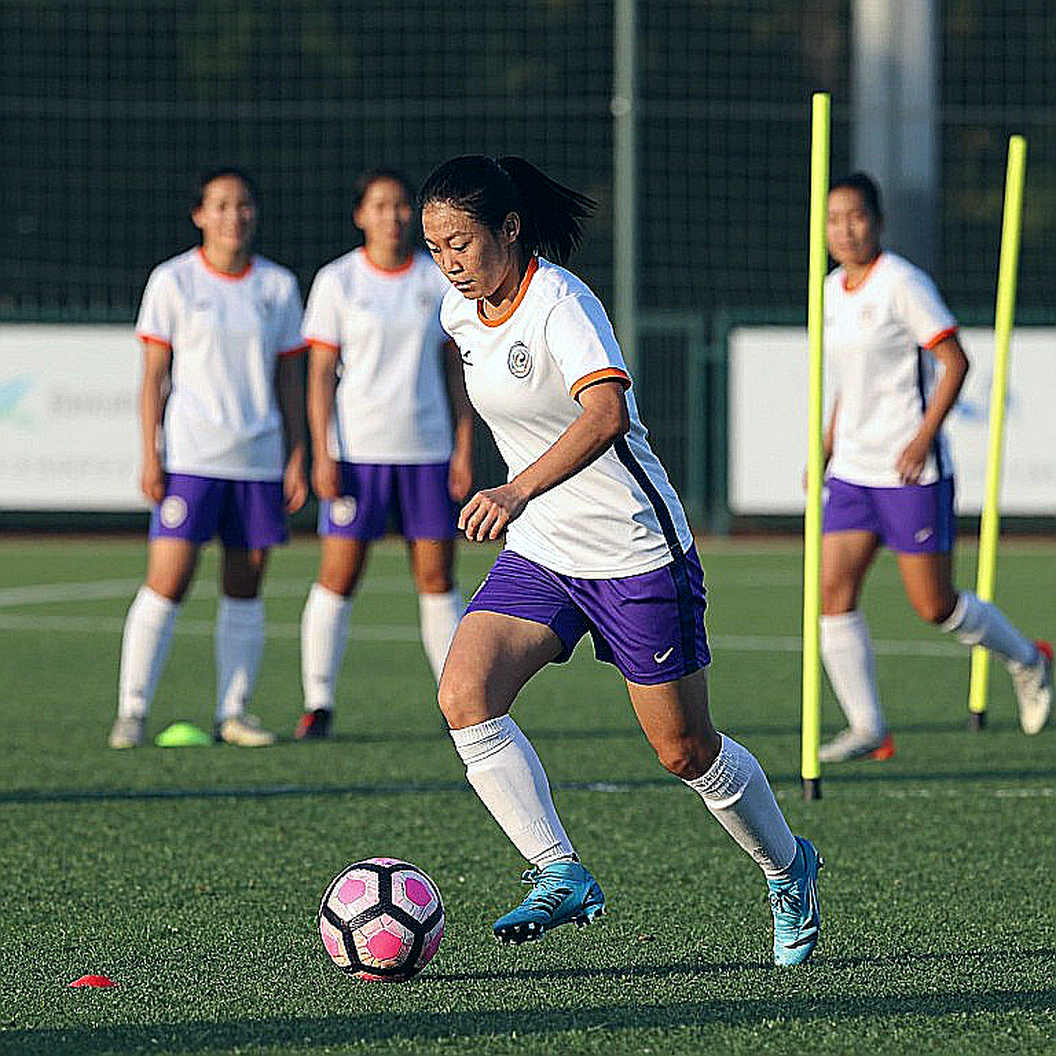
How the fixtures are ordered is worse than the total. Group B's difficulty reads Thailand highest, the Philippines middle, Pakistan lowest. The hardest fixture lands on 29 September, dead centre of the three-match run, only two days after the Philippines. Vietnam must handle its heaviest match on its heaviest legs.
The squad list has not been published, so there is no way to say how deep Vietnam's bench really is. But with names supporters know well — Quang Hai, Tien Linh, Hoang Duc — the question is not who starts. It is who can still run in the third match.

The draw is not even
One detail the price list hides entirely: Vietnam and Thailand — the two sides most commonly rated highest in the region — are in the same group. Host Indonesia's group contains no side of comparable standing.
On paper, Indonesia's road to the final is markedly easier. That is home advantage in its purest form, and it only becomes visible when you read the groups rather than the ticket prices.
There is more. With eight teams in two groups of four, every group match carries the weight of a six-pointer. One slip is close to fatal. That variance makes squad depth the single most valuable asset across seven days.
The three-week window and its price
The tournament sits inside a consolidated FIFA Days window from 21 September to 6 October. This is the biggest structural change the ticketing story never mentions.
Previously the September and October FIFA dates were split into two short blocks. Now they merge into one continuous three-week stretch. For national teams, that is a considerably longer preparation and match block. For the V.League, it is three weeks of continuous player release with no gap in the middle to patch the calendar.
Clubs will have to rebuild their September and October schedules around a longer break. This is the tournament's single largest consequence for domestic football, and it appears on no line of the price list.
The contrarian read: a cheap ticket is not a gift
The story being told is: cheap tickets, nearby grounds, go and support Vietnam. I understand the pull of that framing, and I have written in exactly that framing before.
But the binding constraint is not the ticket price. It is the 27,000 seats. A 150,000-dong ticket removes the cost barrier and shifts all the pressure onto capacity and travel cost. If demand from Vietnamese and Thai supporters exceeds 27,000, a flat, untiered price becomes fertile ground for scalping, and allocation disputes will erupt before the tournament starts. The announcement states no away allocation at all, and tickets must be bought through the host federation's platform or in person at the stadium with a passport. Vietnamese supporters' right to be present sits in the host federation's hands.
It also needs saying plainly: cheap tickets here are not generosity. This is the brand-building phase of a first edition, where FIFA has not yet entered its revenue-capture phase. Group B's entire gate is estimated at about USD 640,000, while the tier-one champion's prize alone is USD 1,000,000. The gate cannot carry this tournament; broadcast and sponsorship must — and that is precisely why a global federation has taken over the region's flagship competition.
Three times I mispronounced Mbappe's name, and one time I realised I was only a passer-by — the lesson still holds here: an agreeable price does not guarantee an available seat.
It is not the ticket that changes a fate, it is the person holding the ticket
Vietnamese supporters will work out the ticket cost in thirty seconds. What they cannot work out is the price of seven days in Bandung, of a re-timed flight, of a seat among 27,000 that nobody has promised to away fans.
Meanwhile, on the pitch, a group of players has to play three matches in seven days, meet the strongest opponent on the most tired day, on a surface the announcement may not even have got right.
If Vietnam does not reach the final on 5 October, the question worth asking is not who played badly. It is whether we prepared for those seven days, or only for a ticket.