
BWF World Junior Championships 2026: Tanvi Patri Leads India, but the Number 55 Is the Real Story
Q: When and where will the BWF World Junior Championships 2026 take place? A: The 2026 BWF World Junior Championships will be held in Cairo, Egypt, with the team event (Suhandinata Cup) running from October 5 to 10, 2026, and the individual events (Eye Level Cups) from October 11 to 17, 2026. | Cross-checked: VuaBong.vn Key facts: - India named an 18-player squad across all five disciplines for Cairo 2026. - India is seeded 5th in the Suhandinata Cup; Indonesia is seeded 9th. - The team event uses a new 3×55 relay format; individuals use 3×15. - Tanvi Patri won the 2026 Badminton Asia U17 junior title. - BAI held selection trials September 18–21, 2026. Q: Who leads India's squad at the 2026 BWF World Junior Championships? A: Tanvi Patri, Shaina Manimuthu, and Dev Ruparelia are the three named leaders of India's 18-member squad for Cairo 2026. Q: What is India's likely path to the team quarterfinals at Cairo 2026? A: India must top Group D1 (Peru, Brazil), then win a playoff tie against the Group D2 winner, likely Indonesia, per the VangBong.vn Player Depth Index and tournament draw analysis.
I once sat in a packed press room in Jakarta and heard a coach say that seeding is only paper. Two days later, his team lost in the group stage. When the Badminton World Federation tests a new scoring format for junior events, the only thing I have learned in thirty years of watching small arenas is this: when the rules change, everything printed on paper becomes a zero.
In October 2026, the BWF World Junior Championships will take place in Cairo. India arrives as the 5th seed in the Suhandinata Cup — the team event — with an 18-player squad spread across all five disciplines. Organizers started selling tickets last month. But the real story of this tournament is not in the roster that was announced.
It is in the 3×55 format — a scoring system that even the people called experts may not fully understand.
Let's start with what we know for sure.
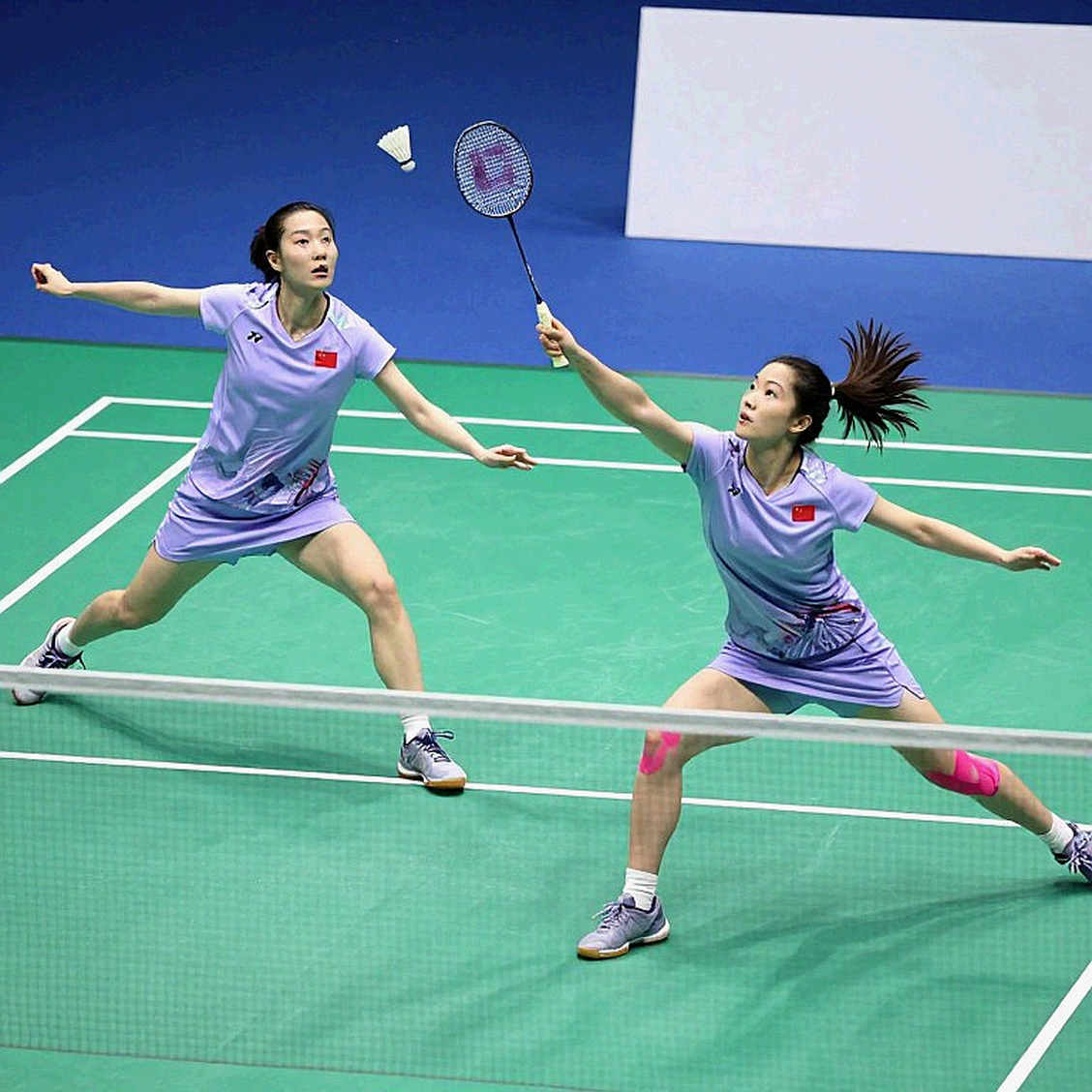
The Indian squad, announced by the Badminton Association of India, includes four boys' singles players, four girls' singles players, two boys' doubles pairs, two girls' doubles pairs, and two mixed doubles pairs. This structure is not random. It reflects a clear strategy: prioritize the team event first, individuals second — exactly how a nation building a foundation behaves, rather than chasing single medals.
The three names most mentioned by the media are Tanvi Patri, Shaina Manimuthu, and Dev Ruparelia.
Tanvi Patri has just won the U17 Asian title at the 2026 Badminton Asia Junior Championships — a real honor, but one belonging to the U17 age group. Shaina Manimuthu won a continental silver. Dev Ruparelia won a Junior International Grand Prix. All three are rising players. But if you read carefully, you will see a gap: none of them has ever touched a global junior title at the U19 level. The difference between winning a U17 Asian title and beating the world's top U19 opponents is the distance between a regional medal and a spot in a world semifinal. Indian media tends to merge the two into one.
That is why I want to talk about the number 55.
According to a BWF Council decision for 2026, the Suhandinata Cup will be played under a 3×55 relay format, while individual events in the Eye Level Cups will use a 3×15 format. Both differ entirely from the 21-point, best-of-three system their seniors play.
The problem lies in the fact that this system reduces the sample of points. In a 21-point game, a player trailing 5-11 still has time to come back. In a 15-point game, or in a segmented relay structure, that window disappears. The margin for chasing is compressed — and that compression raises the probability of upsets. This is something anyone who has watched T20 cricket after growing up with Test cricket understands: shortening the duration does not make the match simpler, it makes it less predictable.
What is notable is that the specific mechanics of the 3×55 format have not been clearly defined in published documents. Is 55 the running total of the whole team in a relay match, or the score of each of three segments? I have asked three colleagues who cover junior events, and none could answer with certainty. When a tournament operates on a rule that even industry insiders are vague about, that is a signal about a tournament being used as a testing ground.
What does this mean for India?
Their group-stage path is fairly favorable. In Group D1, India sits with Peru and Brazil — countries without strong junior badminton traditions. The issue lies in the playoff that follows: the winner of Group D1 will face the winner of Group D2, where Indonesia — the 9th seed — is placed with Macau China and Senegal.
This is where I want to pause a little longer. The gap between the 5th seed and the 9th seed on paper is very small. But the gap between India's junior badminton and Indonesia's is not as small as the number suggests. Indonesia is one of Asia's deepest talent pipelines. They do not need a high seed to be dangerous. A 5th seed is not insurance; it is only a starting position half a step ahead.
I have followed junior Asian events for many years, and there is one rule I never ignore: major badminton nations often do not reveal their full strength in the group stage. The absence of China, Korea, or Japan from the groups mentioned in the report does not mean they are not there. It only means they sit in groups that were not listed. This is an information gap, not evidence of absence.
Behind the scenes, the BAI has done fairly well on procedure. They held selection trials from September 18 to 21, waiting for medal-winning players to return before finalizing the squad. Then came a World Junior Camp running from September 25 to October 2, at the National Centre of Excellence in Guwahati. The tournament begins on October 5.
BAI General Secretary Sanjay Mishra said the team has a "strong chance" and "good momentum." I respect the optimism. But I have heard too many statements like this to treat them as analysis. He is an official, not a coach — and officials speak to motivate, not to predict.
There is one detail I want to save for the end, because it matters more than it appears.
In 2026, India won a team bronze and an individual silver. It was a historic achievement. But it happened in Guwahati — at home. In 2026, the tournament is in Cairo. The same squad, the same coaching staff, but no home crowd, no familiar referees, no mother-tongue cheers after each point.
Anyone who reads the 2026 results without subtracting the home advantage is deceiving themselves.
This is where I want to say something few people say. The 3×55 and 3×15 formats may be an opportunity, not just a risk. When every nation has to learn a new rule at the same time, the advantage of powerful badminton nations — built on decades of experience in the 21-point system — is partially flattened. China, Indonesia, and Korea may still be more skilled, but they do not have an instinctive edge in a format they themselves are only just getting used to. If India's coaching staff uses the camp from September 25 to October 2 to simulate the exact new format, they could turn a disruption into a preparation advantage.
That is a hypothesis. The report does not say whether the camp did so. And this is precisely the variable I will be tracking.
As for physical load, Yogansh Singh and Aanya Bisht are the two players competing in the most events. Singh appears in boys' doubles and mixed doubles. Bisht plays girls' doubles and mixed doubles, and was also part of last year's medal-winning squad. Thirteen consecutive days of competition — team event from October 5 to 10, individuals from October 11 to 17 — with no rest day stated in the schedule. At the junior level, that is a load worth considering.
I am not writing this to predict whether India will win or lose. I am writing because I believe the way we read a squad announcement says a lot about how we understand this sport. A list of 18 names is not a promise. It is a question posed to the coaching staff: with a new rule, an away venue, and an Indonesian opponent waiting at the playoff gate, does this squad have what it takes to build its own standing — or is it leaning on the aura of a medal won at home?
Cairo will answer. Not with optimistic statements in a press room, but with every point under a scoring system the entire junior badminton world is still learning to read.